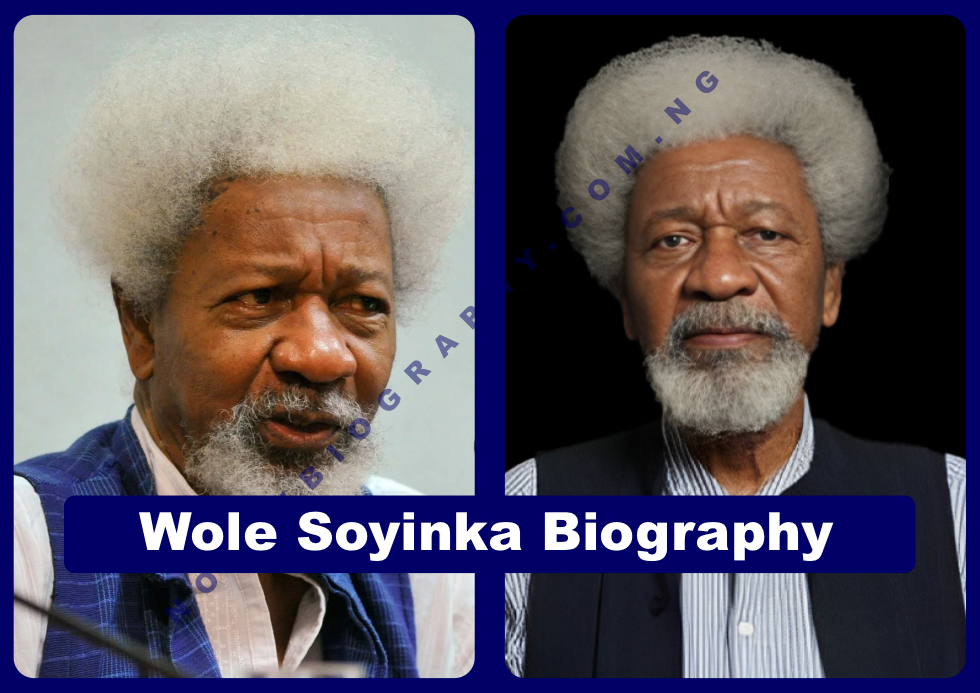
Discover the life of Wole Soyinka, Africa’s first Nobel Literature Prize winner. Explore his biography, literary works, activism, and lasting legacy.
Wole Soyinka stands as a towering figure in world literature, having made history in 1986 as the first African to receive the Nobel Prize for Literature. Born in colonial-era Nigeria and educated across continents, Soyinka has spent over six decades crafting plays, novels, poetry, and essays that interrogate power, identity, and the human condition. His unwavering commitment to justice led to imprisonment, exile, and international acclaim. Today, at 90 years old, he remains one of Africa’s most influential voices, blending Yoruba mythology with Western literary traditions to create works that resonate across cultures and generations.
Key Details of Wole Soyinka Biography
| Field | Information |
|---|---|
| Full Name | Akinwande Oluwole Babatunde Soyinka |
| Date of Birth | July 13, 1934 |
| Age | 90 years old |
| Nationality | Nigerian |
| Occupation | Playwright, Poet, Novelist, Essayist, Political Activist |
| Net Worth | Estimated $5 million |
| Spouse | Folake Doherty (married 1989) |
| Children | Six children |
| Education | University of Leeds (BA in English, 1958; Doctorate, 1973) |
| Major Award | Nobel Prize in Literature (1986) |
| Notable Works | Death and the King’s Horseman, The Lion and the Jewel, Aké: The Years of Childhood |
Early Life and Background
Akinwande Oluwole Babatunde Soyinka was born on July 13, 1934, in Abeokuta, near Ibadan in western Nigeria. His father, Samuel Ayodele Soyinka, was a prominent Anglican minister and headmaster, while his mother, Grace Eniola Soyinka, known affectionately as “Wild Christian,” was a shopkeeper and local activist.
Growing up in an Anglican mission compound, young Wole was exposed to a unique cultural synthesis. He absorbed Christian teachings from his devout parents while simultaneously learning Yoruba spiritualism and tribal customs from his grandfather. This dual heritage would profoundly influence his literary work, as he formed an early identification with Ogun, the Yorùbá deity associated with war, iron, roads, and poetry.
A precocious and inquisitive child, Wole prompted adults to warn one another: “He will kill you with his questions.” His intellectual curiosity was nurtured by his father’s extensive library, which included not only the Bible and English literature but also classical Greek tragedies like Euripides’ Medea. These early readings helped young Soyinka recognize the deep connections between Yoruba folklore and Greek mythology.
His mother’s activism also left an indelible mark. Mrs. Soyinka joined a protest movement led by her sister Funmilayo Ransome-Kuti against the traditional ruler of Abeokuta, who imposed oppressive taxes on shopkeepers with British colonial support. When they refused to pay, the Alake was forced to abdicate. This early exposure to resistance and political activism would shape Soyinka’s lifelong commitment to challenging injustice.
Education and Academic Journey
Soyinka attended St. Peter’s Primary School, where his father served as headmaster, from 1940 to 1946, followed by Abeokuta Grammar School for secondary education and Government College in Ibadan for university preparation. Between 1952 and 1954, he studied English literature, Greek, and Western history at University College Ibadan. During this period, he authored his first radio play, Keffi’s Birthday Treat, which aired in July 1954.
In 1954, Soyinka moved to England to continue his education at the University of Leeds, where he studied under renowned scholars and served as editor of the school magazine, The Eagle. He graduated with a bachelor’s degree in English literature in 1958 and later received an honorary doctorate from the same institution in 1972.
During his six years in England, Soyinka worked as a dramaturgist at the Royal Court Theatre in London from 1958 to 1959. This experience exposed him to contemporary European theater while allowing him to develop his distinctive dramatic voice. He wrote his first major plays during this London period, including The Swamp Dwellers and The Lion and the Jewel, which would later be performed in Nigeria.
Career Journey and Major Achievements
Literary Breakthrough
In 1960, Soyinka was awarded a Rockefeller bursary and returned to Nigeria to study African drama. That same year marked Nigeria’s independence from British colonial rule, and Soyinka seized the moment by writing A Dance of the Forests for the independence celebrations. Rather than offering romantic celebration, the play satirized the fledgling nation’s political elite, stripping away romantic legend to show that the present was no more a golden age than the past.
Soyinka founded the theatre group “The 1960 Masks” in 1960 and the “Orisun Theatre Company” in 1964, producing his own plays and performing as an actor. Throughout the 1960s, he wrote prolifically, creating both satirical comedies like The Trials of Brother Jero and serious philosophical works such as The Strong Breed and The Road.
Imprisonment and Activism
During Nigeria’s civil war, Soyinka appealed in an article for a cease-fire. For this, he was arrested in 1967, accused of conspiring with Biafra rebels, and held as a political prisoner for 22 months until 1969. During his solitary confinement, he wrote poetry on tissue paper and scraps of paper, which were later published as Poems from Prison. His harrowing prison experience was recounted in The Man Died: Prison Notes (1972), a powerful testament to his resilience and commitment to freedom.
Nobel Prize and International Recognition
In 1986, Soyinka received the Nobel Prize in Literature, with the committee praising his work “in a wide cultural perspective and with poetic overtones fashions the drama of existence.” He became the first Black African to receive this honor, and dedicated his acceptance speech to Nelson Mandela, who was then imprisoned in South Africa.
Personal Life and Family
Soyinka has been married three times: to British writer Barbara Dixon in 1958, Nigerian librarian Olaide Idowu in 1963, and his current wife, Folake Doherty, since 1989. He has six children and holds the traditional chieftaincy title of Akinlatun of Egbaland, making him a tribal aristocrat with the right to use the Yoruba honorific Oloye.
In 2014, Soyinka revealed he had been diagnosed with prostate cancer and was cured after ten months of treatment. His resilience in facing this health challenge mirrors the courage he has demonstrated throughout his political and literary life.
Regarding his spiritual beliefs, Soyinka stated in November 2022: “Do I really need one (religion)? I have never felt I needed one. I am a mythologist… No, I don’t worship any deity. But I consider deities as creatively real and therefore my companions in my journey in both the real world and the imaginative world.”
Awards, Honors, and Recognitions
Major Awards:
- 1986: Nobel Prize in Literature
- 1986: Agip Prize for Literature
- 1986: Commander of the Order of the Federal Republic (CFR), Nigeria
- 2005: Chieftaincy title “Akinlatun of Egbaland”
- 2017: Europe Theatre Prize (Special Prize category)
- 2024: Haydée Santamaría medal (Cuba)
Institutional Honors:
- 1993: Honorary doctorate, Harvard University
- 2005: Honorary doctorate, Princeton University
- 2018: University of Ibadan renamed its arts theatre as Wole Soyinka Theatre
- 2025: National Theatre renamed Wole Soyinka Centre for Culture and Creative Arts
Literary Legacy and Influence
Soyinka’s bibliography spans over 60 years and includes approximately 20 major works across multiple genres. His plays draw from Yoruba mythology, particularly the figure of Ogun, while incorporating influences from European dramatists like J.M. Synge. Works such as Death and the King’s Horseman (1975) demonstrate his ability to adapt Yoruba history and ritual into compelling modern drama.
His novels, including The Interpreters (1965) and Season of Anomy (1973), have been compared to the experimental works of Joyce and Faulkner. His 2021 novel Chronicles from the Land of the Happiest People on Earth drew particular praise for its satirical examination of corruption in Nigeria.
His autobiographical works, particularly Aké: The Years of Childhood (1981), offer intimate glimpses into his formative years and remain essential reading for understanding the cultural and political forces that shaped his worldview.
Recent Developments and Continued Activism
Even in his tenth decade, Soyinka remains politically engaged. In October 2025, he revealed that the United States had revoked his visa after he characterized Donald Trump as “Idi Amin in white face.” In December 2025, he publicly criticized the excessive security detail accompanying President Tinubu’s son, demonstrating his continued willingness to speak truth to power.
In 2025, his seldom-produced play The Swamp Dwellers, written in 1958, debuted Off-Broadway, introducing new audiences to his early work exploring generational conflicts and the clash between tradition and modernity.
Interesting Facts
- Soyinka co-founded the National Association of Seadogs, Nigeria’s first confraternity, during his university years
- In 1965, he seized a radio station to broadcast a demand for cancellation of rigged elections
- He dedicated his Nobel Prize acceptance speech to Nelson Mandela
- In July 2024, his children were conferred with three traditional titles by the Oba of Isara-Remo
- The Wole Soyinka Annual Lecture Series was founded in 1994 to honor his contributions to African literature
Conclusion
Wole Soyinka’s life story exemplifies the transformative power of art combined with unwavering moral courage. From his childhood in colonial Nigeria to his Nobel Prize triumph and continued activism at 90, he has never wavered in using literature as a tool for truth-telling and social change. His synthesis of Yoruba tradition and Western literary forms created a uniquely African dramatic voice that speaks to universal human concerns.
What makes Soyinka’s legacy truly remarkable is not merely his literary achievements, but his demonstration that artists have both the right and responsibility to challenge injustice, even at great personal cost. His famous words capture this philosophy: “The man dies in all who keep silent in the face of tyranny.” As Nigeria and the world continue grappling with questions of democracy, identity, and justice, Soyinka’s works remain as relevant and necessary as ever.
Frequently Asked Questions
Who is Wole Soyinka? Wole Soyinka is a Nigerian playwright, poet, novelist, and political activist who became the first African to win the Nobel Prize in Literature in 1986. He is renowned for his powerful dramatic works and lifelong commitment to justice.
What is Wole Soyinka known for? Soyinka is best known for his plays such as Death and the King’s Horseman, The Lion and the Jewel, and A Dance of the Forests. He is also celebrated for his political activism and his imprisonment during Nigeria’s civil war.
How much is Wole Soyinka worth? Wole Soyinka’s net worth is estimated at approximately $5 million, earned through book sales, university professorships, speaking engagements, and literary awards throughout his six-decade career.
Is Wole Soyinka married? Yes, Wole Soyinka is married to Folake Doherty since 1989. He was previously married twice before and has six children.
What are Wole Soyinka’s biggest achievements? His greatest achievement is winning the 1986 Nobel Prize in Literature as the first African recipient. Other major accomplishments include writing over 20 significant works, surviving 22 months of political imprisonment, and influencing generations of African writers.
Leave a Reply