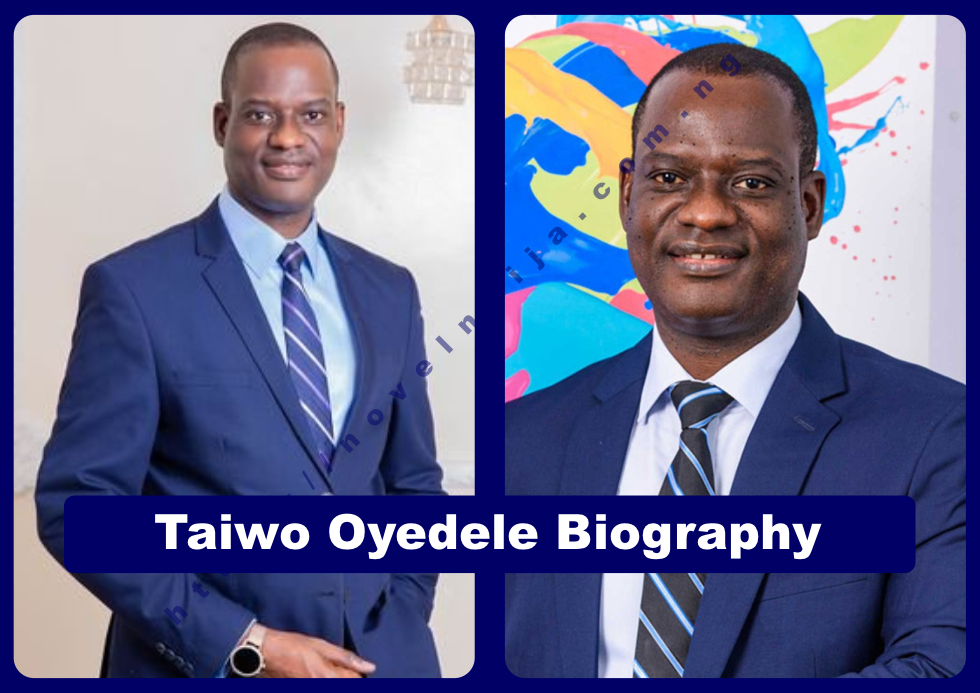
Discover Taiwo Oyedele’s journey from PwC Africa Tax Leader to Presidential Committee Chairman driving Nigeria’s transformative tax reforms benefiting millions.
In Nigeria’s complex economic landscape, few names resonate as powerfully in fiscal policy circles as Taiwo Oyedele. As Chairman of the Presidential Committee on Fiscal Policy and Tax Reforms, this economist and accountant is spearheading what could be the most comprehensive overhaul of Nigeria’s tax system in decades—reforms that directly impact millions of Nigerian workers and businesses.
What strikes me most about Oyedele’s approach to tax reform is his focus on simplification and equity. Having watched Nigeria struggle with multiple, overlapping taxes that burden small businesses while leaving loopholes for the wealthy, his committee’s work to exempt low-income earners and small businesses while creating transparent, streamlined systems represents exactly the kind of practical, people-centered policy Nigeria needs. It’s rare to see someone navigate the technical complexities of tax policy while maintaining genuine concern for ordinary citizens.
Born on June 18, 1975, in Ondo State, Nigeria, Oyedele’s journey from a student at Yaba College of Technology to becoming one of Africa’s foremost tax policy experts exemplifies how technical expertise combined with vision can drive national transformation. His decision to leave a lucrative 22-year career at PwC to serve his country full-time speaks volumes about his commitment to Nigeria’s economic future.
Key Details Of Taiwo Oyedele Biography At a Glance
| Field | Information |
|---|---|
| Full Name | Taiwo Oyedele |
| Date of Birth | June 18, 1975 |
| Age | 49 years (as of 2025) |
| Place of Birth | Ondo State, Nigeria |
| Hometown | Ikaram, Akoko, Ondo State |
| Nationality | Nigerian |
| Ethnicity | Yoruba |
| Occupation | Economist, Accountant, Public Policy Expert |
| Current Position | Chairman, Presidential Committee on Fiscal Policy and Tax Reforms |
| Previous Role | Fiscal Policy Partner & Africa Tax Leader, PwC (22 years) |
| Education | HND (Yaba College of Technology), BSc (Oxford Brookes University) |
| Executive Education | London School of Economics, Yale University, Harvard Kennedy School |
| Academic Roles | Associate Professor (Babcock University), Guest Lecturer (Lagos Business School) |
| Foundation | Founder & President, Impact Africa Foundation |
| Marital Status | Married |
| Children | Two |
| Major Achievement | Successfully passed four comprehensive tax reform bills (2025) |
Early Life and Education
Taiwo Oyedele was born in Ondo State and raised in Ikaram, Akoko, a community where values of hard work, discipline, and excellence were instilled from an early age. Growing up in a vibrant Yoruba community shaped his understanding of Nigeria’s economic challenges at the grassroots level—insights that would later inform his approach to policy design.
His academic journey began at Yaba College of Technology where he obtained a Higher National Diploma (HND) in accountancy and finance. He furthered his education with a BSc in applied accounting at Oxford Brookes University, demonstrating early commitment to professional excellence.
Understanding that policy expertise requires continuous learning, Oyedele completed executive education programs at the London School of Economics, Yale University, Gordon Institute of Business Science, and Harvard Kennedy School. This extensive education across elite global institutions equipped him with both technical skills and international perspectives on fiscal systems and economic challenges.
Career Journey: From PwC to National Service
The PwC Years (2001-2023)
Oyedele’s professional career began in 2001 during his National Youth Service Corps (NYSC) year when he joined PwC Nigeria as an audit and tax trainee. What started as a youth service placement evolved into a remarkable 22-year journey at one of the world’s premier professional services firms.
His progression was impressive: from Associate to Senior Associate (2003), Assistant Manager in Kenya (2006), West Africa Tax Leader (2009), and ultimately Fiscal Policy Partner and Africa Tax Leader at PwC where he worked for 22 years including over 10 years in top leadership positions. In this role, he oversaw tax operations across more than 30 African countries, gaining unparalleled insight into fiscal challenges across the continent.
During his PwC tenure, Oyedele spearheaded initiatives that transformed tax systems across Africa, merging technical expertise with socio-economic awareness. He became known for simplifying complex tax systems, enhancing compliance, and promoting transparency across African economies.
Transition to Public Service
In July 2023, President Bola Ahmed Tinubu appointed Oyedele as Chairman of the Presidential Committee on Fiscal Policy and Tax Reforms. Recognizing the magnitude of this responsibility, Oyedele made the difficult decision to exit PwC completely, stating it was necessary to “focus fully with undivided attention” on his new role, which he considered “an important national” duty.
This sacrifice—leaving a lucrative position at the peak of his career—demonstrated extraordinary commitment to public service and belief in Nigeria’s potential for transformation.
The Tax Reform Revolution
The Four Reform Bills
Under Oyedele’s leadership, the Presidential Committee developed four comprehensive tax reform bills transmitted to the National Assembly in October 2024. In May 2025, the Senate passed four tax reform bills based on the committee’s proposals, and by June 2025, all four bills were enacted into law.
The four laws are:
- Nigeria Tax Act, 2025 (NTA)
- Nigeria Tax Administration Act, 2025 (NTAA)
- Nigeria Revenue Service (Establishment) Act, 2025
- Joint Revenue Board (Establishment) Act, 2025
Key Provisions Benefiting Nigerians
For Workers:
- Full exemption from personal income tax for workers earning up to N1 million annually (approximately N83,000 monthly), representing about one-third of all Nigerian workers
- Reduced PAYE tax for workers earning up to N20 million annually
- Tax exemption for armed forces members fighting insecurity
For Small Businesses:
- 0% income tax for small companies with annual turnover of N50 million or less
- Zero withholding tax deduction on business income
- VAT exemptions for qualifying small businesses
- No tax for companies with turnover not exceeding N100 million and fixed assets under N250 million
For Consumers:
- Zero VAT on essential items: food, education, and healthcare (60% of consumption)
- VAT exemption on rent, public transportation, fuel products, and renewable energy
- These items constitute 82% of household consumption and nearly 100% for low-income households
For Large Businesses:
- Corporate tax rate reduction from 30% to 25% (phased implementation)
- VAT input credit allowing up to 7.5% reduction in production costs
- Tax incentives for employers who hire more workers
- Economic development tax credits at 5% per annum for priority sector investments
Implementation Timeline
The Nigeria Tax Act and Nigeria Tax Administration Act commenced on January 1, 2026, while the establishment acts for the Nigeria Revenue Service and Joint Revenue Board took effect June 26, 2025, ensuring institutional readiness for full implementation.
Academic Contributions and Mentorship
Beyond his policy work, Oyedele is a professor at Babcock University, adjunct faculty at the University of Lagos, and a visiting scholar at the Lagos Business School. In these roles, he inspires future financial leaders, sharing practical knowledge gained from decades of experience.
As an author, keynote speaker, and mentor, Oyedele regularly engages with professionals, students, and policymakers, making complex fiscal concepts accessible and actionable.
Impact Africa Foundation
Oyedele is the founder of Impact Africa Foundation, a non-profit organization focused on social impact and youth empowerment. Through this platform, he has empowered countless individuals, particularly in underprivileged communities, proving his belief that meaningful change starts with education and opportunity.
The foundation reflects his philosophy that true success lies in uplifting society—a principle that guides both his philanthropic work and public policy approach.
Leadership Roles and Recognition
Oyedele’s expertise has been recognized through numerous prestigious positions:
- Fellow of the Nigeria Leadership Initiative
- Member of the Global Tax Forum
- Former member of the Global Governing Council of the Association of Chartered Certified Accountants (ACCA)
- Former Thematic Lead for Fiscal Policy & Planning Commission
- Former Chairman of West Africa Debt Management Roundtable (Nigerian Economic Summit Group)
- Former Chairman of Taxation & Fiscal Policy Faculty Board (Institute of Chartered Accountants of Nigeria)
- Former member of Nigerian Taxation Standards Board
- Former Vice Chairman of the National Tax Policy Committee (Federal Ministry of Finance)
Philosophy and Approach to Reform
Oyedele’s approach to tax reform is characterized by several key principles:
Equity and Fairness: Ensuring low-income earners and small businesses aren’t crushed by taxation while closing loopholes that allow wealthy individuals and large corporations to avoid fair contributions.
Simplification: Consolidating Nigeria’s complex, multi-layered tax system into streamlined frameworks that reduce compliance burden and increase transparency.
Economic Growth Facilitation: Designing tax policy not merely for revenue collection but as a tool for stimulating economic activity, job creation, and sustainable development.
Stakeholder Engagement: Despite criticism from some quarters, Oyedele maintains openness to dialogue, stating his committee looks forward “to the opportunity to discuss specific areas for improvement in the bills to better serve the interest of all Nigerians.”
Transparency and Public Education: Actively using social media and public forums to explain reforms, answer questions, and address concerns—a refreshing departure from typical government opacity.
Personal Life
Oyedele is married with two children and credits his family for providing unwavering support throughout his demanding career. Despite his high-profile roles and busy schedule, he prioritizes work-life balance, demonstrating that personal stability supports professional excellence.
His name, “Taiwo,” traditionally signifies a twin in Yoruba culture, adding cultural significance to his identity. While he keeps much of his personal life private, his public service demonstrates deep connection to his Nigerian roots and commitment to his country’s progress.
Challenges and Resilience
The tax reform journey hasn’t been without opposition. The Nigeria Labour Congress initially called for withdrawal of the bills, expressing concerns about worker impact. Oyedele responded not with defensiveness but with detailed explanation of how reforms actually benefit workers through lower taxes, employment incentives, and reduced cost of living.
Some northern governors initially opposed aspects of the VAT distribution formula, but Oyedele’s committee engaged in dialogue and made adjustments, demonstrating flexibility while maintaining reform integrity.
Navigating Nigeria’s complex political landscape, balancing competing interests, and maintaining reform momentum amid criticism requires extraordinary resilience—qualities Oyedele consistently demonstrates.
Conclusion
Taiwo Oyedele’s story is ultimately about service—service informed by expertise, driven by vision, and sustained by genuine concern for Nigeria’s future. His willingness to sacrifice a lucrative career for uncertain public service, his patient engagement with critics, and his focus on policies that tangibly improve ordinary Nigerians’ lives distinguish him as a rare breed of public servant.
The tax reforms he’s championing represent more than technical policy adjustments; they embody a philosophy that government exists to serve people, that complexity often masks inequity, and that sustainable economic growth requires creating environments where businesses can thrive while ensuring vulnerable citizens aren’t left behind.
Whether these reforms ultimately transform Nigeria’s economy as intended remains to be seen—implementation will test both the policies’ soundness and the government’s commitment. But Oyedele has done his part: designing comprehensive, thoughtful reforms that address real problems with practical solutions grounded in both technical expertise and human empathy.
For young Nigerians aspiring to make impact, Oyedele’s journey offers valuable lessons: excellence matters, continuous learning is essential, and the highest achievement often involves using expertise not for personal enrichment but for collective progress. His legacy will be measured not in personal accolades but in whether Nigeria’s tax system becomes fairer, simpler, and more growth-oriented—transforming millions of lives in the process.
Frequently Asked Questions
Who is Taiwo Oyedele?
Taiwo Oyedele is a Nigerian economist, accountant, and Chairman of the Presidential Committee on Fiscal Policy and Tax Reforms. He previously served as Africa Tax Leader at PwC for 22 years before dedicating himself full-time to reforming Nigeria’s tax system.
What are Taiwo Oyedele’s tax reforms about?
The reforms simplify Nigeria’s tax system, exempt low-income earners and small businesses from most taxes, reduce corporate tax rates, eliminate VAT on essential items like food and healthcare, and create transparent revenue collection systems aimed at economic growth and fairness.
How will the tax reforms benefit ordinary Nigerians?
Workers earning under N83,000 monthly pay no income tax; essential items like food, education, and healthcare have zero VAT; small businesses with turnover under N50 million pay no income tax; and public transportation and rent are VAT-exempt—directly reducing cost of living for millions.
What is Taiwo Oyedele’s educational background?
Oyedele holds an HND in Accountancy and Finance from Yaba College of Technology and a BSc in Applied Accounting from Oxford Brookes University. He completed executive programs at London School of Economics, Yale University, Harvard Kennedy School, and Gordon Institute of Business Science.
Is Taiwo Oyedele married?
Yes, Taiwo Oyedele is married with two children. While he keeps his personal life private, he has publicly acknowledged his family’s crucial support throughout his career and credited them as motivation for his work.
Leave a Reply