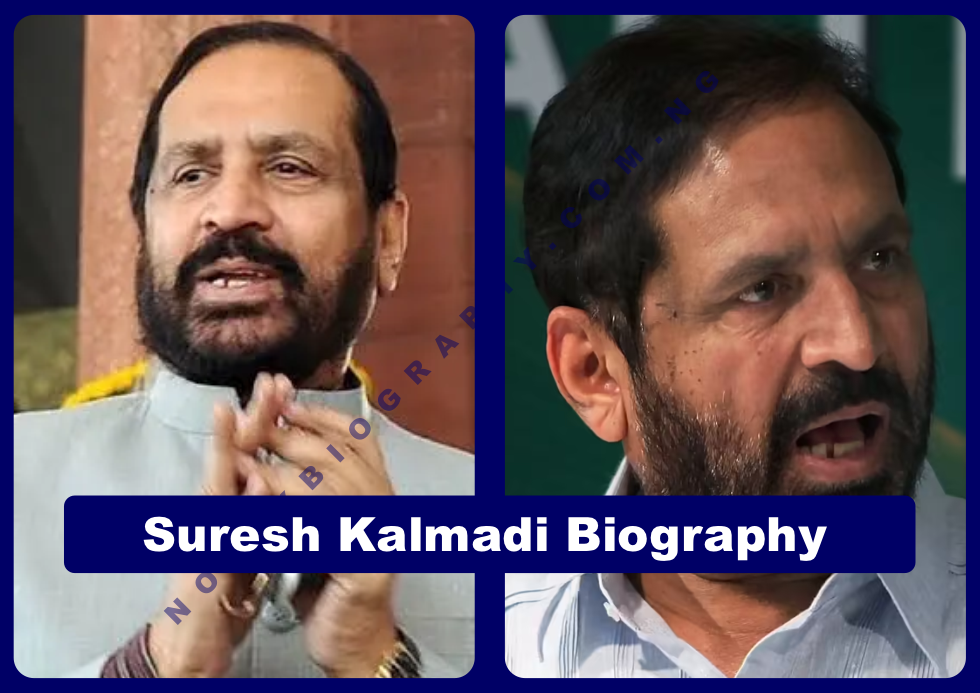
Complete biography of Suresh Kalmadi, former IOA president, politician, and Commonwealth Games organizer. Read about his career, controversies, and legacy.
Suresh Kalmadi was an Indian politician and sports administrator who passed away on January 6, 2026, at the age of 81. Throughout his multifaceted career, he left an indelible mark on Indian sports and politics—though not always for the reasons he might have hoped. From his early days as an Indian Air Force pilot to becoming one of the most powerful figures in Indian sports administration, Kalmadi brought several top-class events to the country including the 2003 Afro Asian Games, the 2008 Commonwealth Youth Games, and the 2010 Commonwealth Games. Yet his legacy remains forever intertwined with allegations of corruption that would eventually overshadow his many achievements.
Key Details Of Suresh Kalmadi Biography
| Field | Information |
|---|---|
| Full Name | Suresh Keshavrao Kalmadi |
| Date of Birth | May 1, 1944 |
| Place of Birth | Chennai (Madras), Tamil Nadu |
| Date of Death | January 6, 2026 |
| Age at Death | 81 years |
| Nationality | Indian |
| Occupation | Politician, Sports Administrator |
| Political Party | Indian National Congress |
| Spouse | Meera Kalmadi (m. 1971) |
| Children | 3 (Two daughters, One son) |
| Education | Fergusson College, Pune; National Defence Academy |
| Notable Position | IOA President (1996-2012) |
Early Life and Background
Born in Madras in 1944, Kalmadi’s family traced its roots to Mangalore in Karnataka. Though born in Chennai, Pune would become his adopted home and the city he would represent in Parliament for decades. Kalmadi studied at St. Vincent’s High School in Pune and later attended Fergusson College, where he developed the discipline and leadership qualities that would define his career.
Growing up in post-independence India, Kalmadi witnessed firsthand the nation’s struggles to establish itself on the world stage. Perhaps this early exposure to India’s quest for recognition influenced his later determination to bring international sporting glory to the country.
Education and Military Service
In 1960, Kalmadi joined the National Defence Academy in Pune, and in 1964, he joined the Air Force Flying Colleges in Jodhpur and Allahabad. He served the Indian Air Force between 1964 and 1974 as a commissioned pilot and later as an instructor, retiring with the rank of Squadron Leader.
His military background instilled in him organizational skills and strategic thinking that would later prove invaluable in both politics and sports administration. During his service, he received eight medals for his contributions to the Indian Air Force.
Political Career Journey
Kalmadi’s transition into politics came after being noticed by Sharad Pawar, eventually leading him into the Congress party’s organizational structure. His political ascent was methodical and impressive.
In 1977, he became President of the Indian Youth Congress in Pune, marking the start of his political career, and from 1978 to 1980, he served as President of the Maharashtra Youth Congress. He was elected to the Rajya Sabha from Maharashtra for four terms—his first in 1982, followed by subsequent terms starting in 1988, 1994, and 1998.
During P.V. Narasimha Rao’s tenure as Prime Minister, Kalmadi served as Minister of State for Railways from 1995 to 1996 and presented the Railway Budget that year. He was elected to the 11th Lok Sabha in 1996 and to the 14th Lok Sabha in 2004, representing Pune until May 2014.
Sports Administration Legacy
Kalmadi’s most significant contributions came in the realm of sports administration, where he wielded unprecedented influence for nearly two decades.
He served as president of the Indian Olympic Association from 1996 to 2012 and as president of the Asian Athletics Association from 2000 to 2013, being named its Life President in 2015. He was president of the Athletics Federation of India from 1987 to 2006 and served as member council of World Athletics.
One of his biggest successes was reviving the National Games, organizing them at regular intervals at different venues including Pune, Bengaluru, Chandigarh, Hyderabad, and Manipur. He managed to pull in international track and field stars for eight meets in Delhi from 1989 to 1998 and helped organize the Pune International Marathon.
Kalmadi was honored with the Association of National Olympic Committees award in Beijing in 2008 for his role in spreading awareness on Olympic Games.
The 2010 Commonwealth Games Controversy
The 2010 Commonwealth Games would prove to be both Kalmadi’s crowning achievement and his ultimate downfall. As chairman of the organizing committee, he oversaw India’s most ambitious sporting event—but it would be remembered more for scandal than sport.
The Central Vigilance Commission asked the Central Bureau of Investigation to probe certain aspects of the games’ organization, with the opposition demanding Kalmadi’s resignation. On April 25, 2011, Kalmadi was arrested by the CBI on charges of corruption, cheating, and criminal conspiracy, specifically in connection with the award of a Rs 107 crore contract for the Timing, Scoring, and Results system to a Swiss firm without competitive bidding.
The CBI alleged that he was the main accused, stating he had supreme overriding powers in the Organizing Committee of the Commonwealth Games 2010. Kalmadi spent 10 months in jail before being granted bail with a surety amount of Rs 500,000.
Personal Life and Family
Kalmadi married Meera Kalmadi in 1971. The couple had three children together. His son Sumeer was a director in Sulba Realty, and his daughter Payal Aditya Bhartia and son-in-law Aditya Bhartia also held business positions.
He is survived by his wife, son and daughter-in-law, two married daughters and sons-in-law, and grandchildren.
Awards and Recognitions
Throughout his career, Kalmadi received numerous honors:
- Eight medals during his Indian Air Force service
- Association of National Olympic Committees award (Beijing, 2008)
- Named Life President of the Asian Athletics Association in 2015
- Asian Athletics Association President’s Award (June 3, 2015)
Contributions Beyond Politics
Beyond his political and sports roles, Kalmadi took over as Chairman of the Maharashtra Tourism Development Corporation and in 1989 started the Pune Festival. As head of the Indian Olympic Association, he signed an agreement to bring the Formula One Grand Prix to India in 2007.
His vision extended beyond mere event management—he genuinely believed in elevating India’s global sporting profile and creating infrastructure that would benefit future generations of athletes.
The Legal Aftermath
Kalmadi’s membership of the Indian National Congress Party was suspended after being arrested and charged with corruption, and on April 26, 2011, he was sacked from the post of president of the Indian Olympic Association.
A Delhi court allowed him on July 13, 2012, to go to London for the Olympics, but the Delhi High Court restrained him on July 25, 2012, from participating in the opening ceremony, saying his participation could cause embarrassment to the nation.
Final Years and Passing
Suresh Kalmadi died on January 6, 2026, at around 3:30 am after a prolonged illness at Deenanath Mangeshkar Hospital in Pune, with his last rites performed the same day at 3:30 pm at the Vaikunth Crematorium in Navi Peth, Pune.
Influence, Impact, and Complex Legacy
Despite the lasting damage the charges did to his reputation, it would be unfair to make Kalmadi’s legacy all about the Commonwealth Games wrongs. He fundamentally transformed Indian sports administration, bringing international events to India and creating platforms for athletes to compete at the highest levels.
Supporters argue that reducing his legacy to controversy alone ignores his role in India’s Olympic progress, including the historic 2008 Beijing Games where Abhinav Bindra won India’s first individual Olympic gold.
Yet there’s no denying that the Commonwealth Games scandal permanently tarnished his reputation and became a cautionary tale about the intersection of power, sports, and corruption in India.
Conclusion
Suresh Kalmadi’s story is one of remarkable achievement shadowed by profound controversy. From his disciplined beginnings as an Air Force pilot to his transformation into one of India’s most powerful sports administrators, he demonstrated vision, determination, and organizational prowess. He genuinely believed in India’s sporting potential and worked tirelessly to create opportunities for athletes and bring international recognition to the country.
Yet his legacy will forever be complicated by the corruption allegations that emerged from the 2010 Commonwealth Games—a reminder that power without accountability can undermine even the most impressive achievements. What makes Kalmadi’s story remarkable isn’t just the heights he reached, but the complete reversal of fortune that followed, serving as both inspiration and cautionary tale for future leaders in Indian sports and politics.
FAQs
Who was Suresh Kalmadi?
Suresh Kalmadi was an Indian politician and sports administrator who served as president of the Indian Olympic Association from 1996 to 2012 and represented Pune in Parliament for several terms.
What was Suresh Kalmadi known for?
He was known for bringing major international sporting events to India, including the 2010 Commonwealth Games, though his legacy was overshadowed by corruption allegations related to that event.
Was Suresh Kalmadi married?
Yes, he married Meera Kalmadi in 1971 and had three children—two daughters and one son.
What happened to Suresh Kalmadi after the Commonwealth Games?
He was arrested by the CBI in April 2011 on corruption charges, spent 10 months in jail, and was released on bail. His Congress party membership was suspended and he was removed from the IOA presidency.
What were Suresh Kalmadi’s biggest achievements?
His achievements include reviving the National Games, serving as IOA president for 16 years, bringing the Commonwealth Games to India, and receiving the ANOC award in 2008 for promoting Olympic awareness.
Leave a Reply