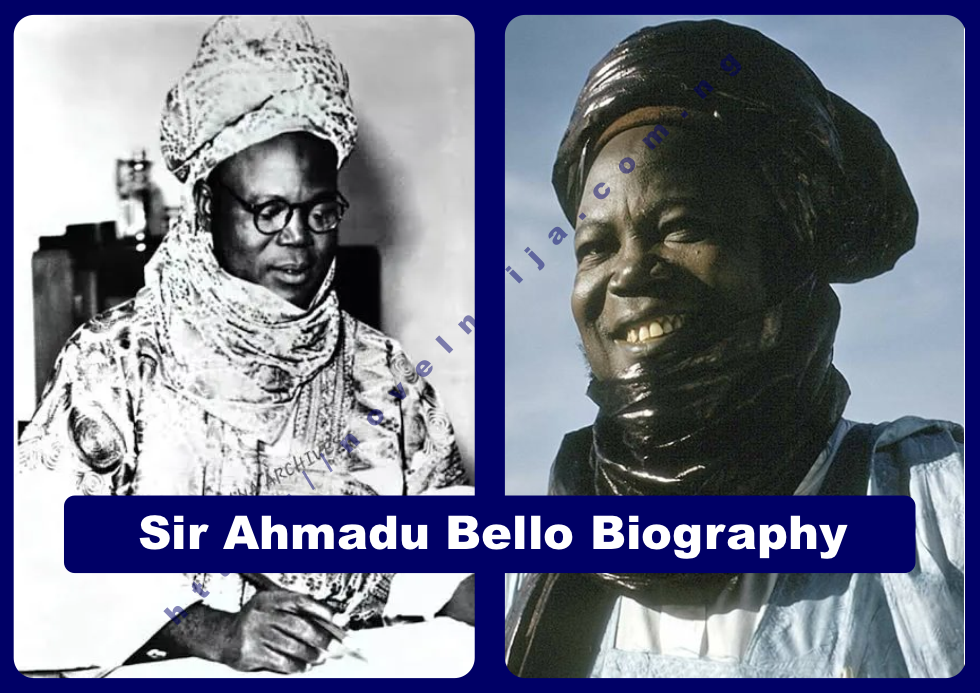
Discover Sir Ahmadu Bello’s inspiring legacy as Premier of Northern Nigeria, founding father, and modernizer who unified diverse peoples.
Sir Ahmadu Bello, known as the Sardauna of Sokoto, stands as one of Nigeria’s most influential founding fathers. Serving as the first and only Premier of Northern Nigeria from 1954 until his assassination in 1966, Bello masterfully navigated his region through independence while modernizing an entire territory spanning diverse ethnic and religious communities.
What strikes me most about the Sardauna’s story is his remarkable choice at independence: despite leading the majority party in Nigeria’s parliament, he declined to become Prime Minister, preferring instead to remain in the North to serve his people directly. This decision reveals a leader motivated by genuine service rather than personal ambition—a rare quality in any political era. His transformation of Northern Nigeria from a largely traditional society into a modernized region with world-class institutions remains his enduring testament.
Key Details Of Sir Ahmadu Bello Biography
| Field | Information |
|---|---|
| Full Name | Ahmadu Ibrahim Bello (born Ahmadu Rabah) |
| Title | Sardauna of Sokoto |
| Date of Birth | June 12, 1910 |
| Place of Birth | Rabah, Sokoto Emirate (now Sokoto State) |
| Date of Death | January 15, 1966 (aged 55) |
| Place of Death | Kaduna, Northern Nigeria |
| Nationality | Nigerian |
| Religion | Islam |
| Political Party | Northern People’s Congress (NPC) |
| Position | Premier of Northern Nigeria (1954-1966) |
| Education | Sokoto Provincial School, Katsina Training College |
| Father | Ibrahim Atiku Bello (Sarkin Rabah) |
| Spouses | Hafsatu (senior wife), Amina, and Jabbo |
| Children | Three surviving daughters: Inno, Aisha, Lubabatu |
| Legacy | Ahmadu Bello University, ₦200 note portrait |
Early Life and Background
Born on June 12, 1910, in the village of Rabah, Sokoto Emirate, Ahmadu Bello entered a world steeped in Islamic tradition and political heritage. His father, Ibrahim Atiku Bello, held the prestigious title of Sarkin Rabah (District Head of Rabah). The young Ahmadu carried royal blood—he was a direct descendant of Uthman dan Fodio, the revered founder of the Sokoto Caliphate, and the great-grandson of Sultan Muhammad Bello himself.
Tragedy struck early when his father died when Ahmadu was just six years old. Despite this loss, he received comprehensive Islamic education at home under Malam Garba, the Imam of Rabah Village, who taught him the Quran, Islamic jurisprudence, and the traditions of Prophet Muhammad. This early grounding in Islamic scholarship would shape his worldview and leadership style throughout his life.
The town of Rabah, where he spent his formative years, was a microcosm of Northern Nigerian society—predominantly Muslim, deeply traditional, yet slowly encountering the forces of colonial modernization. Young Ahmadu absorbed both worlds: the timeless values of the Sokoto Caliphate and the emerging realities of British colonial administration.
Education and Academic Journey
Bello’s educational journey bridged traditional Islamic learning and modern Western education. After his Quranic studies, he attended Sokoto Provincial School, the only modern school in Sokoto province at the time, and later enrolled at Katsina Training College (now Barewa College), founded in 1921 by British Governor-General Hugh Clifford.
During his school years, he was known as Ahmadu Rabah and distinguished himself as both School Prefect and Class Captain. He graduated as a teacher in 1931 with a Grade III certificate, finishing top of his class at age 21. The Sultan of Sokoto immediately appointed him as an English teacher at Sokoto Middle School, his former school, where he taught from 1931 to 1934.
In 1948, a pivotal moment arrived: Bello received a government scholarship to study Local Government Administration in England. This British training significantly broadened his understanding of governance systems and would prove invaluable in his later political career. The experience exposed him to parliamentary democracy, administrative best practices, and modern development strategies—knowledge he would later apply to transforming Northern Nigeria.
Career Journey and Major Achievements
From Teacher to Traditional Ruler
At just 25 years old in 1934, Bello was appointed District Head of Rabah, succeeding his brother. This marked his entry into traditional administration. Four years later, in 1938, he was promoted to Divisional Head of Gusau (in present-day Zamfara State) and became a member of the Sultan’s council.
The Failed Sultanate Bid
In 1938, at age 28, Bello made an audacious bid to become Sultan of Sokoto. He lost to Sir Siddiq Abubakar III, who would reign for an extraordinary 50 years until 1988. Rather than creating lasting bitterness, this defeat opened a different path. The new Sultan immediately conferred upon Bello the traditional title of Sardauna of Sokoto—meaning Crown Prince—and elevated him to the Sokoto Native Authority Council. These appointments made him Chief Political Adviser to the Sultan.
By 1944, he had risen to Chief Secretary of the State Native Administration, overseeing 47 districts across Sokoto Province. This administrative experience prepared him superbly for the larger political stage that awaited.
Entry into Politics
In the 1940s, Bello joined Jamiyya Mutanen Arewa (the Northern People’s Society), which later became the Northern People’s Congress (NPC) in 1951. After returning from his British training, he was nominated to represent Sokoto province in the regional House of Assembly.
As an assemblyman, Bello emerged as a powerful advocate for Northern interests, embracing consultation and consensus-building with major representatives from Kano, Bornu, and Sokoto emirates. He served on the committee that redrafted the Richards Constitution and attended the pivotal general conference in Ibadan.
In the first elections held in Northern Nigeria in 1952, Bello won a seat in the Northern House of Assembly and became Minister of Works. He would successively serve as Minister of Local Government, Community Development, and Development and Production.
Premier of Northern Nigeria
In 1954, Ahmadu Bello became the first Premier of Northern Nigeria, a position he would hold for twelve transformative years. In the crucial 1959 independence elections, he led the NPC to win a plurality of parliamentary seats, making the party the dominant force in Nigerian politics.
The NPC forged an alliance with Dr. Nnamdi Azikiwe’s NCNC to form Nigeria’s first indigenous federal government, leading to independence from Britain on October 1, 1960. As NPC president and the leader of the majority party, Bello could have easily claimed the position of Prime Minister of the newly independent Nigeria.
Instead, in a decision that defines his character, Bello chose to remain as Premier of Northern Nigeria, devolving the Prime Minister position to his deputy, Sir Abubakar Tafawa Balewa. He preferred to stay in the North rather than relocate to Lagos in the South. This choice suggests he was not interested in power for its own sake but in serving his people where he believed he could be most effective.
Modernization and Development Initiatives
As Premier, Bello’s accomplishments were extraordinary:
Educational Revolution: He founded Ahmadu Bello University in Zaria in 1962, which became the second-largest university in Africa and the largest in West Africa. He served as its first Chancellor. The university symbolized his vision of bridging traditional values with modern education.
Economic Development: Bello established the Northern Regional Development Corporation (NRDC, later NNDC), the Bank of the North (now Unity Bank), and the Northern Nigeria Development Company. These institutions laid the economic foundation for regional growth.
Media and Communication: He founded the Broadcasting Company of Northern Nigeria (BCNN) and the Nigerian Citizen Newspapers, ensuring Northern voices were heard in the national discourse.
Infrastructure: The Sardauna established the 16,000-seater Ahmadu Bello Stadium in Kaduna, creating a venue for sports and cultural events.
Northernization Policy: Recognizing that Western education was less widespread in the North compared to the South, Bello implemented a controversial but pragmatic policy of northernization of the public service, aimed at ensuring adequate Northern representation in government positions.
Leadership Style and Philosophy
Bello’s biographer, John Paden, described him as a “progressive conservative”—an agent of change who also respected traditional elites and values. He traveled constantly across the North, meeting with people and listening to their concerns. He combined religious, traditional, and modern values in his leadership approach.
His autobiography, “My Life,” reveals a disciplined, principled man who valued hard work and moral uprightness. In one memorable passage, he humorously critiqued British hospitality at conferences, noting his discomfort with late nights and drinking, reflecting his Islamic values and disciplined nature.
Personal Life and Family
Bello practiced polygamy, consistent with Islamic tradition. At the time of his death, he had three wives. His senior wife, Hafsatu bint Abdulkadir Maccido (daughter of the Waziri of Sokoto), whom he married in 1932, died alongside him during the coup. His other wives included Amina (Goggon Kano) bint Abubakar, daughter of the District Head of Bici, and Jabbo bint Aliyu, daughter of the Sarkin Yaki of Gwandu.
He had multiple children, though only three daughters survived to adulthood: Inno (born 1942), Aisha (born 1945), and Lubabatu (born June 1966—after her father’s death). Aisha passed away in Dubai in 2021 at age 75, survived by five children including prominent businessman Magajin Garin Sokoto Hassan Danbaba.
In 1955, Bello performed the Hajj pilgrimage to Mecca, after which he was addressed as Alhaji Ahmadu Bello. From then until his death, he visited Mecca annually, deepening his spiritual commitment.
His personal residence in Kaduna has been transformed into Arewa House (Gidan Arewa), now a museum and research center managed by Ahmadu Bello University, preserving his legacy and Northern Nigerian history.
Contributions to Nigerian Unity and Independence
Despite being a strong advocate for Northern interests, Bello believed in Nigerian unity, though he favored federalism as the best system for Nigeria’s diverse population. He wanted to protect the North from potential Southern domination while ensuring all regions developed together.
His approach to independence was complex. In 1953, he opposed Anthony Enahoro’s motion for immediate independence with his famous statement about the “mistake of 1914,” referring to the amalgamation of Northern and Southern Nigeria. Yet he worked tirelessly to ensure that when independence came, Northern Nigeria would be prepared and competitive.
Bello championed Pan-African unity and refused to waste time blaming colonialism for Nigeria’s challenges. Instead, he focused on practical development, adopting from the West what suited Nigeria while retaining cherished cultural practices and values integral to Nigerian identity.
Controversies and Challenges
The Corruption Charge
In 1943, Bello was briefly jailed on corruption charges—an incident that marked a difficult period in his career. However, he emerged from this experience with renewed determination and maintained high moral standards throughout his subsequent political career.
The “Mistake of 1914” Statement
His 1953 statement calling the 1914 amalgamation of Nigeria a “mistake” and his opposition to immediate independence created tensions with Southern politicians who were eager for self-rule. Some interpreted his position as secessionist, though Bello argued he was protecting Northern interests within a federal structure.
The “Sword in the Atlantic” Quote
Bello was quoted as saying he would “dip his sword into the Atlantic Ocean,” which some interpreted as expressing a dream of an Islamic Nigeria extending from the North to the southern coasts. This statement generated controversy and suspicion among non-Muslim Nigerians, though interpretations of his intent vary.
Religious and Regional Tensions
As a devout Muslim who promoted Islamic values in governance, Bello sometimes faced criticism from Christian and Southern leaders who worried about the implications for Nigeria’s religious and ethnic diversity. His northernization policy was controversial, with critics viewing it as discriminatory against qualified Southern Nigerians.
The Assassination: A Nation’s Tragedy
On January 15, 1966, at approximately 3:00 AM, Major Chukwuma Nzeogwu led a group of army officers in a military coup against Nigeria’s First Republic. The conspirators targeted key political leaders, including Prime Minister Sir Abubakar Tafawa Balewa and the Sardauna.
Soldiers stormed Bello’s residence in Kaduna. According to historical accounts, the Sardauna told his family to stay away for their safety, but they refused to abandon him. When confronted by the soldiers, Bello bravely introduced himself as the Sardauna of Sokoto and Premier of Northern Nigeria.
In a heartbreaking final act of devotion, his senior wife Hafsatu threw herself in front of him in a protective embrace. Both were shot to death. The bullet that killed Bello penetrated his spinal cord; he died instantly at age 55.
The assassination of the Sardauna, along with other political leaders, plunged Nigeria into crisis. The coup, which many Northerners perceived as an Igbo-led attempt to dominate the country, triggered massacres of Igbos in the North and ultimately contributed to the Nigerian Civil War (1967-1970), when the Eastern region attempted to secede as Biafra.
Legacy and Honors
Monuments and Memorials
The Sardauna’s legacy permeates Northern Nigeria and the entire country:
- Ahmadu Bello University (ABU), Zaria remains one of Africa’s premier institutions, educating hundreds of thousands of students since its founding
- The ₦200 note features his portrait, ensuring every Nigerian handles his image in daily commerce
- Arewa House preserves his memory and serves as a research center for Northern Nigerian history
- Ahmadu Bello Stadium in Kaduna hosts major sporting and cultural events
- Numerous schools, streets, and institutions bear his name across Nigeria
His Enduring Impact
Bello’s greatest legacy was the modernization and unification of Northern Nigeria’s diverse peoples. He transformed a largely traditional society into a region with modern institutions, infrastructure, and economic foundations. He demonstrated that one could be both deeply traditional and progressively modern, respecting cultural heritage while embracing necessary change.
The respect he commanded in the North was surpassed only by that accorded to Uthman dan Fodio himself, founder of the Sokoto Caliphate. Millions of Nigerians, particularly in the North, still venerate his memory.
Interesting Facts and Lesser-Known Details
- Bello shares his birthday, June 12, with what is now Nigeria’s Democracy Day—a fitting coincidence given his role in the nation’s political evolution
- During his school days, he was called “Gamji” as a nickname in addition to Ahmadu Rabah
- He finished top of his class in 1931 at age 21, demonstrating early academic excellence
- The title “Sardauna” is peculiar to Sokoto and originally meant “Captain of the Bodyguard,” with ancient sword and baldric as its insignia
- Bello was School Prefect and Class Captain during his time at Katsina Training College
- He traveled to Mecca annually from 1955 until his death in 1966
- His autobiography, “My Life,” published in 1962 by Cambridge University Press, provides invaluable insight into his thinking and personality
- Despite his political power, he maintained disciplined personal habits, going to bed early and working consistently rather than engaging in what he called the “expensive way of wasting time” at social gatherings
Conclusion
Sir Ahmadu Bello’s life represents a remarkable synthesis of tradition and modernity, religious devotion and political pragmatism, regional loyalty and national consciousness. From his failed bid to become Sultan of Sokoto to his position as arguably the most powerful figure in Nigeria at independence, the Sardauna’s journey exemplifies resilient leadership.
What makes his story truly exceptional is not merely his political accomplishments—the institutions he founded, the policies he implemented, the modernization he achieved—but the values he embodied. He chose service over power, staying in the North as Premier rather than claiming the Prime Ministership. He combined deep Islamic faith with progressive development policies. He respected tradition while embracing necessary change.
The tragic circumstances of his death—standing bravely before his assassins while his devoted wife threw herself protectively in front of him—reflect the courage and dignity that characterized his entire life. His assassination robbed Nigeria of a unifying figure at a critical moment, contributing to the tragic civil war that followed.
Today, as Nigeria continues to grapple with issues of federalism, regional development, religious harmony, and national unity—the very challenges Bello addressed—his legacy remains profoundly relevant. The institutions he built still serve millions. His portrait on the ₦200 note ensures his face remains familiar to every Nigerian. And the example he set of principled, development-focused leadership continues to inspire.
Sir Ahmadu Bello proved that one can be deeply rooted in tradition while reaching boldly toward the future. In a continent still navigating the tensions between heritage and progress, his life offers enduring lessons about leadership, service, and the possibility of transformative change that respects both past and future.
FAQs
Who was Sir Ahmadu Bello? Sir Ahmadu Bello, titled the Sardauna of Sokoto, was a Nigerian statesman who served as the first and only Premier of Northern Nigeria from 1954 to 1966. He was a founding father of modern Nigeria and leader of the Northern People’s Congress.
What is Sir Ahmadu Bello known for? He is known for modernizing Northern Nigeria, founding Ahmadu Bello University, establishing key economic institutions like the Bank of the North, and serving as a bridge between traditional Islamic leadership and modern governance during Nigeria’s independence era.
How did Sir Ahmadu Bello die? He was assassinated on January 15, 1966, during a military coup led by Major Chukwuma Nzeogwu. He and his senior wife Hafsatu were shot to death at his residence in Kaduna. The assassination contributed to tensions that led to the Nigerian Civil War.
Why did Sir Ahmadu Bello refuse to be Prime Minister? Despite leading the majority party in 1960, Bello chose to remain Premier of Northern Nigeria rather than become Prime Minister because he preferred to stay in the North and serve his people directly rather than relocate to Lagos in the South.
What is Sir Ahmadu Bello’s greatest achievement? His greatest achievement was the comprehensive modernization of Northern Nigeria, including founding Ahmadu Bello University, establishing economic development corporations, creating modern media outlets, and unifying the diverse peoples of the region while preserving their cultural identity.
Leave a Reply