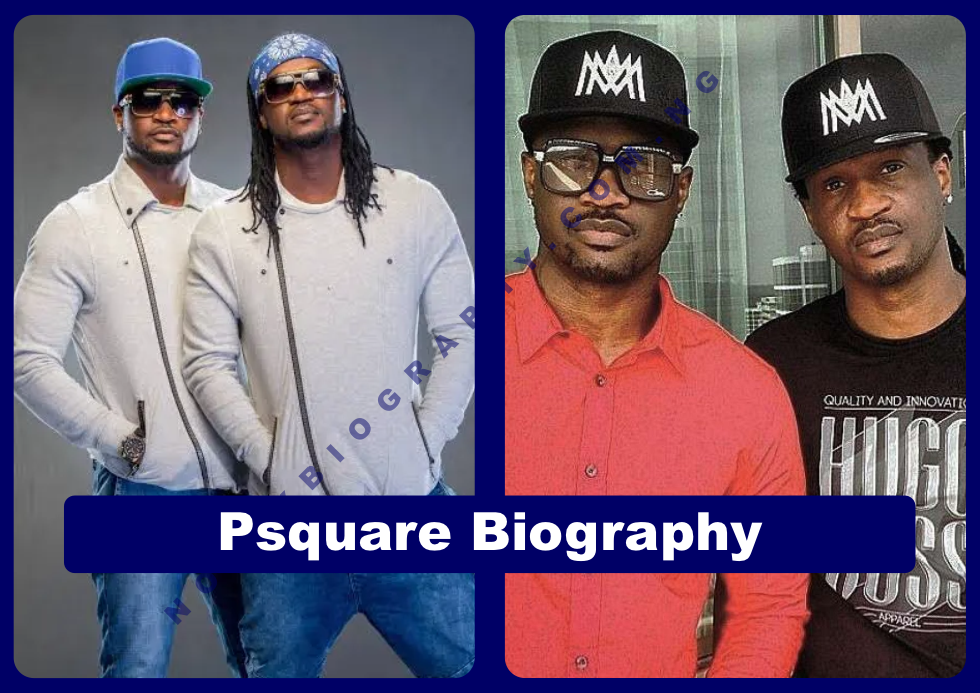
Discover the incredible journey of P-Square – from Jos to global stardom. Learn about Peter & Paul Okoye’s music empire, their 2017 split, 2021 reunion & $20M net worth.
P-Square, composed of identical twin brothers Peter Okoye and Paul Okoye, are widely regarded as one of the most influential musical acts to emerge from Africa. Born on November 18, 1981, in Jos, Nigeria, these musical powerhouses revolutionized African pop music by seamlessly blending R&B, hip-hop, and Afrobeat with electrifying dance choreography inspired by Michael Jackson. Their journey from a small Catholic school in Jos to selling out arenas across continents represents not just musical excellence, but the power of brotherhood, persistence, and artistic vision. With chart-topping hits like “Do Me,” “Chop My Money,” and “Personally,” P-Square dominated African music for over a decade before their dramatic 2017 split and subsequent 2021 reunion.
Key Details Of P-Square Biography
| Field | Information |
|---|---|
| Full Names | Peter Okoye & Paul Okoye |
| Date of Birth | November 18, 1981 |
| Age | 43 years old (as of 2025) |
| Birthplace | Jos, Plateau State, Nigeria |
| Nationality | Nigerian |
| State of Origin | Ifite Dunu, Anambra State |
| Occupation | Musicians, Singers, Songwriters, Dancers |
| Genre | Afrobeat, R&B, Hip-Hop, Pop |
| Years Active | 2003 – 2017, 2021 – Present |
| Record Label | Square Records |
| Combined Net Worth | Approximately $20 million (2024 estimates) |
| Notable Albums | Last Nite (2003), Get Squared (2005), Game Over (2007), Danger (2009), The Invasion (2011), Double Trouble (2014) |
Early Life and Background
Peter and Paul Okoye were born on November 18, 1981, in Jos to Josephine Okoye, a pastor, and Pa Moses Okoye, a businessman. Growing up in a Catholic household with their siblings Jude, Mary, Tony, Lilian, and Ifeanyi, the twins were raised with strong Christian values that would later influence their approach to life and music.
The duo attended St. Murumba Secondary School in Jos, where they became part of the school drama and music club. It was here that their passion for performance ignited as they began mimicking the dance moves and vocal styles of international superstars like Michael Jackson, MC Hammer, and Bobby Brown. These early performances at school talent shows laid the foundation for what would become their signature style: a combination of smooth vocals and synchronized choreography.
The twins initially formed an acapella group called “Smooth Criminals” with three other members – Michael, Melvin, and M Clef. This early experience taught them harmony, stage presence, and the discipline required to succeed in the entertainment industry.
Education and Musical Development
In 1999, Peter and Paul returned to music school to develop their skills on the keyboard, drums, bass, and rhythm guitar. This formal training complemented their natural talent and gave them the technical foundation to produce their own music. During this period, they also contributed soundtracks to several Nollywood films including “Tobi,” “Mama Sunday,” “Moment of Bitterness,” and “Eva’s River.”
Later in 1999, they applied to the University of Abuja to study Business Administration. When the Smooth Criminals disbanded as members dispersed to different universities, Peter and Paul formed their own duo, experimenting with various names including “Double P,” “P&P,” and “Da Pees” before finally settling on “P-Square” – a name that symbolized their unbreakable bond as twin brothers working in perfect synchronization.
Career Breakthrough and Rise to Stardom
The Winning Formula (2001-2003)
In 2001, P-Square won the “Grab Da Mic” competition, and Benson & Hedges sponsored their debut album. This victory proved to be their breakthrough moment. Peter Okoye later recalled the significance of this achievement, noting they were still in their first year at the University of Abuja when they competed against 38 artists in Jos, then 22 in the Abuja finals, before emerging as overall winners in Lagos.
Their debut album “Last Nite” was released in 2003 under Timbuk2 Music Label. The album garnered the duo a nomination for The Most Promising African Group at the KORA Awards 2003 and won the 2003 Amen Award for Best R&B Group. The single “Senorita” introduced Nigerian audiences to their unique sound – a cosmopolitan blend that felt both foreign and familiar.
Dominance and Global Recognition (2005-2014)
Their second album “Get Squared” (2005), released under their own label Square Records, established them as bonafide stars in Nigeria. However, it was their third album “Game Over” (2007) that catapulted them to legendary status. The album reportedly sold over 8 million copies worldwide and is the only 2000s project from Nigeria to have surpassed 30 million streams on Spotify.
P-Square found a way to give Nigerians a cosmopolitan sound that was both foreign and familiar, taking genres from American contemporaries like Usher, Omarion, and Ne-Yo and making them African and Nigerian. They incorporated pidgin English, local stories, and African native languages, creating something entirely new yet accessible.
In 2008, P-Square released an accompanying Game Over video album, the first of its kind in the industry. This innovation demonstrated their commitment to pushing boundaries. The success earned them Best Group at the MTV Africa Music Awards 2008, with additional nominations for Artist of the Year and Best Video.
In 2010, P-Square won Best Group at the MTV Africa Music Awards. That same year, they were named Artist of the Year at the KORA Awards in Ouagadougou, Burkina Faso, receiving a prize of $1 million. Their reach extended beyond Africa – they were the first Nigerian acts to peak at top 5 on SNEP, France’s official music chart, and top 10 on Ultratop, Belgium’s official chart in 2012.
In December 2011, they signed a record deal with Akon’s Konvict Muzik label, joining fellow Nigerians Wizkid and 2Face Idibia. Their 2014 album “Double Trouble” featured international collaborations with T.I., Jermaine Jackson, Don Jazzy, and Dave Scott, further cementing their global appeal.
Personal Life and Family
After dating for seven years, Peter Okoye got engaged to his longtime girlfriend, Titilola Loretta Omotayo, a marketing representative. The couple, who are parents to son Cameron and daughter Aliona, held their traditional wedding on November 17, 2013, at The Ark in Lekki, Lagos. The star-studded ceremony included guests like Aliko Dangote, Emmanuel Adebayor, Kate Henshaw, and Genevieve Nnaji.
Paul Okoye has also built his own family, though he has maintained more privacy about his personal life. Both brothers have consistently emphasized the importance of family values instilled in them during their Catholic upbringing.
Awards and Recognition
Throughout their career, P-Square accumulated numerous accolades:
- 2003: Amen Award for Best R&B Group
- 2007: Best Group at Channel O Music Video Awards
- 2008: Best Group at MTV Africa Music Awards
- 2010: Artist of the Year at KORA Awards (with $1M prize)
- 2011: BET Awards nomination
- Multiple MTV Africa Music Awards nominations
- MOBO Awards nomination for Best African Act
Their influence earned them recognition from Forbes Africa, who consecutively referred to them as the “Best African Group” and included them on their lists of the 40 most powerful celebrities in Africa.
The Painful Split (2016-2017)
The duo had a difference in opinion regarding what Peter perceived as a lopsidedness in individual input of songs featured on their joint albums, with Paul getting a lion’s share of his songs selected. This creative tension, combined with disagreements about their management (their elder brother Jude Okoye served as manager), led to mounting friction.
Problems reportedly started in 2014 when they released “Ejeajo” featuring T.I., as debate arose among fans about Paul being the songwriter with the sweet voice while Peter was the dancer. This perception, though the brothers initially tried to dismiss it, created an underlying tension that would eventually boil over.
In September 2017, P-Square officially disbanded. Peter sent a termination letter to their lawyer, stating his intention to cancel his contract with the “P-Square Brand.” The brothers pursued solo careers under the stage names Mr. P (Peter) and Rudeboy (Paul), each releasing successful tracks independently. Peter also ventured into acting, appearing in Genevieve Nnaji’s “Lionheart” (2018) and Netflix’s “Shanty Town.”
The Miraculous Reunion (2021)
In November 2021, the duo put an end to their years-long falling-out when they both hugged and shook hands at Peter Okoye’s home in Lagos. Their elder brother Jude and Peter’s wife were present for this emotional reconciliation. The reunion video went viral, igniting celebrations across Africa and the diaspora.
In an interview with CNN’s Larry Madowo, Peter Okoye claimed that despite their close relationship, human nature got the better of them, while Paul remarked that their breakup story was similar to ordinary breakups that happen in music groups. The brothers attributed their reconciliation to God, stating that none of them coerced the reunion – it occurred naturally.
In July 2022, P-Square released two reunion singles: “Jaiye (Ihe Geme)” and “Find Somebody,” marking their return to the music scene. They announced their ambitious “100 Cities World Tour,” performing across North America, Europe, Asia, the Middle East, and Africa. In September 2022, P-Square made a fiery debut at the Royal Albert Hall, London, with guest artists including Dbanj, Awilo Longomba, and Weird MC.
Another Split? (2024)
Unfortunately, tensions resurfaced in 2024. During an interview with City FM in Lagos, Paul (Rudeboy) confirmed that Peter had sent him a message saying he was no longer interested in the group. Paul revealed that their elder brother Jude, who people accused of causing issues previously, had no hands in this split – when they reunited, Jude wasn’t even in the picture as manager or director.
Net Worth and Financial Success
As of 2024, P-Square’s estimated net worth is around $20 million, making them one of the wealthiest music duos in Africa. Their wealth stems from multiple revenue streams:
Music Revenue: Album sales, digital streaming royalties, and catalog monetization continue generating substantial income. Their Game Over album alone remains a streaming powerhouse decades after release.
Live Performances: P-Square earned an average of N20 million for shows in Nigeria and double their local fee when performing outside the country.
Endorsements: Major brand partnerships have included Globacom (worth over N250 million), Olympic Milk, Kia Motors Nigeria, and Coca-Cola. These deals significantly boosted their earnings during their peak years.
Real Estate: Both brothers own luxurious properties in Lagos, particularly in affluent areas like Lekki and Banana Island, with their shared mansion valued at approximately N1 billion.
Luxury Assets: Their collection includes high-end vehicles such as Range Rovers, Bentley Continental GT, Lamborghini Aventador, and Mercedes-Benz G-Wagons.
Legacy and Cultural Impact
P-Square was different – like something new but with the warmness of something old. Their sound reminded many Nigerians of home. They pioneered a new era in Nigerian music video production, setting standards for choreography, cinematography, and storytelling that inspired countless artists including Bracket, Selebobo, and C Flex.
Their influence extended beyond music. They proved that African artists could achieve global recognition without compromising their cultural identity. They demonstrated how one should not give up, even in difficult times, with songs like “Bring It On”, and their track “Shekini” helped them break into the Arab world market, with artists like Black Cats and Arash sampling the song.
The duo’s story also highlights the complexities of family and business relationships. Their repeated splits and reunions reflect universal struggles that many artists and siblings face when navigating creative partnerships, individual ambitions, and shared legacies.
Conclusion
P-Square’s journey from the halls of St. Murumba Secondary School to global stages represents one of African music’s most compelling narratives. Their ability to blend Western influences with African authenticity created a sound that resonated across continents and generations. Despite the challenges of managing creative differences and family dynamics, their musical legacy remains undeniable.
What makes P-Square’s story remarkable isn’t just their commercial success or the millions of records sold. It’s the resilience behind it – the ability to rise, fall, and rise again. Whether performing together or pursuing solo careers, Peter and Paul Okoye have individually and collectively shaped the trajectory of African pop music, inspiring a generation of artists to dream bigger and reach further. Their music continues to soundtrack celebrations, weddings, and moments of joy across Africa and beyond, ensuring that P-Square’s influence will endure for decades to come.
FAQs
Who is P-Square?
P-Square is a Nigerian music duo consisting of identical twin brothers Peter and Paul Okoye, known for their Afrobeat, R&B, and hip-hop fusion with dynamic choreography.
What is P-Square known for?
P-Square is known for hit songs like “Do Me,” “Personally,” “Chop My Money,” and “Beautiful Onyinye,” as well as being pioneers of modern African pop music with international appeal.
How much is P-Square worth?
P-Square’s combined net worth is estimated at approximately $20 million as of 2024, derived from music sales, streaming, endorsements, real estate, and live performances.
Are P-Square still together?
P-Square reunited in November 2021 after a four-year split, but tensions reportedly resurfaced in 2024, with conflicting reports about their current status.
What are P-Square’s biggest achievements?
P-Square won Artist of the Year at the 2010 KORA Awards (with $1M prize), sold over 8 million copies of their Game Over album, and became the first Nigerian acts to chart in France’s top 5 and Belgium’s top 10.
Leave a Reply