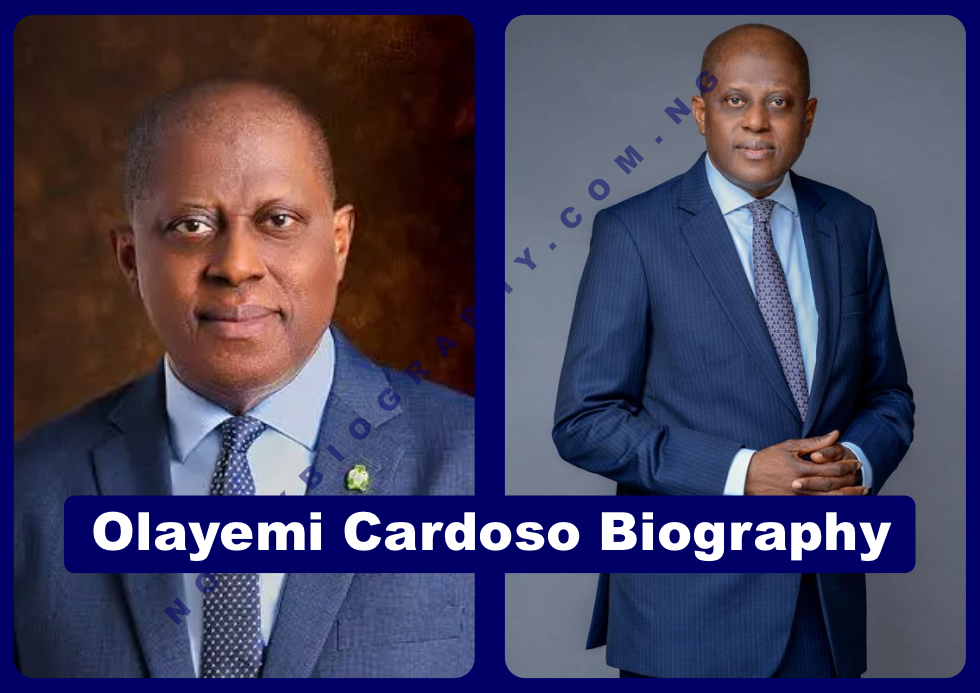
Discover Olayemi Cardoso’s journey from Citibank executive to CBN Governor. Explore his bold reforms, leadership style, and impact on Nigeria’s economy.
Olayemi Michael “Yemi” Cardoso is a Nigerian banker serving as the governor of the Central Bank of Nigeria since October 2023. With over four decades of experience spanning banking, public policy, and economic development, Cardoso represents a new era of orthodox monetary policy in Africa’s largest economy. His appointment came at a critical juncture when Nigeria grappled with multiple exchange rates, mounting inflation, and a foreign exchange crisis that threatened investor confidence.
What makes Cardoso’s story compelling isn’t just his impressive credentials—it’s his willingness to make tough, unpopular decisions in pursuit of long-term economic stability. Watching him navigate Nigeria’s complex economic landscape reminds me that true leadership often means choosing what’s necessary over what’s easy.
Key Details Of Olayemi Cardoso Biography
| Field | Information |
|---|---|
| Full Name | Olayemi Michael Cardoso |
| Date of Birth | July 10, 1957 |
| Age | 67 years |
| Nationality | Nigerian |
| State of Origin | Lagos State |
| Occupation | Banker, Central Bank Governor, Public Policy Expert |
| Current Position | Governor, Central Bank of Nigeria |
| Term | October 2023 – October 2028 |
| Education | B.Sc. Aston University (1980), MPA Harvard Kennedy School (2005) |
| Spouse | Abimbola Chima Cardoso |
| Children | 5 children (including triplets and twins) |
| Grandchildren | 3 |
Early Life and Family Heritage
Cardoso’s parents were descendants of Brazilian returnees who came from prominent families from Popo Aguda, a historic Lagos community where freed slaves from Brazil established themselves in the 19th century. This heritage of resilience and entrepreneurship would shape his worldview.
Born into a family where financial excellence ran deep, Cardoso’s father, Felix Bankole Cardoso, was the first indigenous Accountant-General of the Federation of Nigeria in 1963 and later became the first indigenous Vice Chairman and Managing Director of Barclays Bank in 1972. The elder Cardoso played a pivotal role in transforming Barclays Bank into Union Bank, a completely Nigerian-owned institution—a legacy of economic nationalism his son would inherit.
Growing up in Lagos during Nigeria’s post-independence era, young Olayemi witnessed firsthand the possibilities and challenges of building a modern African economy. He attended Corona School Ikoyi and St. Gregory’s College, Lagos, institutions known for producing Nigeria’s elite. The values of discipline, excellence, and public service instilled during these formative years became the foundation of his career.
Education and Academic Excellence
Cardoso earned a Bachelor’s degree in Managerial and Administrative Studies from Aston University, United Kingdom, in 1980. This choice of specialization—blending management, finance, and accounting—proved prescient for someone who would later navigate both corporate boardrooms and government ministries.
After two decades in banking, Cardoso returned to academia, recognizing that public service required different competencies than private sector success. He studied for a Master’s degree in Public Administration from the Harvard Kennedy School of Government, graduating in 2005 as a fellow of the distinguished Michael Romer Memorial Scholarships. This Harvard experience exposed him to global best practices in economic governance and strengthened his conviction in evidence-based policymaking.
In 2017, Cardoso was conferred with a Doctorate in Business Administration (honoris causa) by the University of Aston in Birmingham in recognition of his outstanding contributions to both the private and public sectors. This honorary doctorate symbolized how far he’d traveled from that young Nigerian student in Birmingham decades earlier.
Banking Career and Rise to Prominence
Cardoso’s professional journey began modestly. After a brief spell with Howard Tilly & Co., Chartered Accountants in London, he took up a role with Citibank and went through the Citibank credit training program in Athens, Greece, before being mobilized to Citibank in Abidjan, Ivory Coast in 1982. These early international postings—from Greece to Ivory Coast—gave him a pan-African perspective rare among Nigerian bankers.
In 1988, Cardoso was charged with setting up Citibank’s first branch outside Lagos in Kano, Nigeria, where he led the bank’s operations across northern Nigeria before being appointed Vice President. This northern Nigerian experience proved invaluable, giving him insights into the country’s diverse economic landscape beyond the cosmopolitan southwest.
The 1990s marked a turning point. In 1990, Olayemi, along with fellow Citibank colleagues, founded Citizens Bank, Nigeria, where he assumed leadership roles as Head of Corporate Banking and Head of Treasury and Financial Institutions consecutively, serving as an Executive Director of the bank for eight years. This entrepreneurial leap demonstrated his confidence in Nigeria’s financial future.
His banking career culminated in his tenure as Chairman of Citibank Nigeria Ltd from 2010 to 2022, making him the leader of one of the world’s leading global banks and the oldest international bank in Nigeria for 12 years. Under his chairmanship, Citibank Nigeria championed diversity, gender inclusion, and corporate governance—values that would later inform his approach as CBN Governor.
Public Service and Economic Reform in Lagos
In 1999, with the transition to democratic rule in Nigeria, Cardoso was appointed a Commissioner in Lagos State, setting up and overseeing the Ministry of Economic Planning & Budget, which functioned as the think-tank of the administration. This appointment by then-Governor Bola Tinubu marked his entry into public service—and the beginning of a partnership that would shape Lagos State’s transformation.
As Lagos’s first Commissioner for Economic Planning and Budget, Cardoso was tasked with nothing less than reimagining the state’s economic future. He implemented the blueprint which catalyzed economic development in the state and championed reform, pioneering state-of-the-art analytical and consultative mechanisms for improving governance. These reforms laid the groundwork for Lagos to generate independent revenue and reduce dependence on federal allocations—a model other Nigerian states would attempt to replicate.
Cardoso founded the Africa Institute for Leadership and Public Administration (AILPA), which focused on promoting private-public partnerships. This initiative reflected his belief that Africa’s development required bridging the gap between government and business, between policy and execution.
Leadership Philosophy and Impact
Throughout his career, Cardoso has demonstrated a consistent leadership philosophy: transparency, data-driven decision-making, and long-term thinking over short-term popularity. In an interview during the World Bank Spring Meetings, Cardoso described his approach as “definitely a long-term call,” acknowledging that orthodox economic policies require patience to yield results.
Known in banking and business circles as a “decent, solid and hardworking guy,” Cardoso has served in various high public and private positions. This reputation for integrity proved crucial when Nigeria needed credible leadership at the Central Bank.
During his banking and public sector career, he served as Chairman of the Lagos Economic Summit Group (2020-2021), the Africa Venture Philanthropy Alliance, and as a member of the Economic Advisory Council of the Federal Republic of Nigeria (2015-2019). These roles positioned him at the intersection of business, policy, and development—exactly where Nigeria’s challenges lived.
Appointment as CBN Governor
On September 15, 2023, President Bola Tinubu appointed Cardoso to serve as the governor of the Central Bank of Nigeria for a term of five years, with his confirmation by the Nigerian Senate following on September 23, 2023. He commenced his tenure on October 5, 2023.
The appointment came during one of Nigeria’s most challenging economic periods. When Cardoso took over in September 2023, he famously described the position as the second hardest job in the world. This wasn’t hyperbole—he inherited a foreign exchange backlog of $7 billion, multiple exchange rates creating arbitrage opportunities, inflation above 20%, and a Central Bank that had strayed from its core mandate through quasi-fiscal interventions.
Cardoso inherited a situation where monetary policy was rather unorthodox, with a lot of attention spent on unorthodox interventions, creating challenges in managing monetary policy in that manner.
Bold Reforms and Economic Transformation
Cardoso’s first year as CBN Governor has been defined by decisive, often painful reforms aimed at restoring macroeconomic stability. He emphasized the critical role of reforms in stabilizing the Nigerian economy amidst global and domestic challenges, outlining the CBN’s strides in steering Nigeria’s economy through significant reforms aimed at stabilizing prices, improving the foreign exchange market, and fostering sustainable growth.
Foreign Exchange Market Reforms
Cardoso undertook significant reforms in the foreign exchange market, including the elimination of multiple exchange rates and the clearance of a $7 billion backlog in foreign exchange obligations. This backlog had paralyzed businesses waiting for forex allocations and damaged Nigeria’s reputation among international investors.
Critical initiatives such as the unification of the exchange rate system and the implementation of an electronic FX matching platform had been pivotal in restoring transparency and attracting foreign investments. These reforms hurt in the short term—causing naira depreciation—but addressed fundamental distortions that had plagued the economy for years.
Fiscal Discipline
Cardoso cited the cessation of deficit financing through the CBN’s Ways and Means advances, which had reached an unsustainable level of ₦22.7 trillion as of 2023, marking a return to fiscal discipline and reinforcing the Bank’s core mandate of price stability. This decision to stop printing money for government spending required political courage, given the immediate budget pressures it created.
Results and Investor Confidence
These efforts had already begun to yield tangible results, with heightened investor confidence, a surge in foreign portfolio inflows, and external reserves climbing to over $40 billion—the highest level recorded in nearly three years. For anyone watching Nigeria’s economic trajectory, these figures represent more than statistics—they signal a potential turning point.
Under Governor Cardoso, the reforms shifted the Bank away from intervention-heavy monetary management toward a rules-based, transparent, and credibility-driven framework. This philosophical shift—from discretion to rules—may prove Cardoso’s most enduring legacy.
Personal Life and Values
Despite his public prominence, Cardoso values his privacy when it comes to his personal life. At 67 years old, Cardoso is married to Abimbola Chima Cardoso, with whom he shares five children and three grandchildren.
His wife, Abimbola, is a leading financial adviser born in 1959 to a Yoruba father (the late Otunba T.O.S. Benson, former Minister of Information) and an Igbo mother (Dr. Mercy Benson, Nigeria’s first Igbo female doctor). This inter-ethnic marriage embodies Nigeria’s diversity and reflects Cardoso’s inclusive worldview.
Despite his demanding career, he remains dedicated to his family and personal growth. Those who know him describe a man who balances the weight of managing Africa’s largest economy with the grounding influence of family and faith.
Vision for 2026 and Beyond
Looking ahead, Governor Cardoso has outlined a 2026 agenda anchored on four pillars: price stability, financial system resilience, institutional credibility, and inclusive growth support. This framework suggests a CBN Governor thinking beyond crisis management toward sustainable transformation.
At the 2025 CBN Executive Policy Seminar in Abuja, Cardoso emphasized that “The economy belongs to everyone”—a reminder that monetary policy ultimately serves ordinary Nigerians, not just markets and technocrats.
Awards and Recognition
Throughout his career, Cardoso has received numerous accolades:
- Honorary Doctorate in Business Administration from Aston University (2017)
- Global Distinguished Alumni Award from Citi
- Fellow of the Chartered Institute of Stockbrokers
- Honorary Fellowship of the Chartered Institute of Bankers of Nigeria, conferred alongside Lagos State Governor Babajide Sanwo-Olu in November 2024
Legacy and Lasting Impact
What makes Cardoso’s story remarkable isn’t just professional success—it’s his willingness to accept Nigeria’s second-hardest job when he could have retired comfortably. At 66, he chose public service over leisure, orthodoxy over populism, and long-term stability over short-term approval ratings.
As Nigeria enters 2026, the reforms under Cardoso signal a central bank determined to restore confidence, enforce discipline, and lay the foundation for sustainable economic recovery. Whether these reforms succeed will shape not only his legacy but Nigeria’s economic future for decades.
For young Nigerians pursuing careers in finance or public service, Cardoso’s journey offers valuable lessons: credentials matter, but so does courage; technical expertise is essential, but so is moral clarity; and sometimes, the most important work happens when you’re willing to be unpopular in pursuit of what’s right.
Interesting Facts
- Cardoso’s father transformed Barclays Bank into Union Bank, Nigeria’s first fully indigenous bank
- He established Citibank’s first branch outside Lagos in Kano, bridging Nigeria’s north-south divide
- Founded Citizens Bank with fellow Citibank colleagues in 1990
- Served on boards ranging from Chevron Oil to philanthropic organizations
- Co-founded the Ehingbeti Summit, Lagos State’s influential economic forum
- Described his CBN role as “the second hardest job in the world”
- His reforms have been called “orthodox” in contrast to his predecessor’s interventionist approach
Conclusion
Olayemi Cardoso’s journey from the son of Nigeria’s first indigenous Accountant-General to the leader of its Central Bank represents more than personal achievement—it embodies the possibilities and challenges of building African institutions. His reforms, though painful, reflect a conviction that Nigeria’s economic potential can only be realized through discipline, transparency, and adherence to sound policy.
The true test of his leadership won’t be measured in months but in years—in whether inflation declines sustainably, whether the naira stabilizes, whether businesses can plan with confidence. But what makes Cardoso’s story inspiring is his willingness to accept this challenge, to pursue what’s necessary rather than what’s popular, and to bet his reputation on Nigeria’s capacity for transformation.
As Nigerians navigate the difficult adjustments his policies require, they might remember that sometimes the hardest decisions today create the foundation for tomorrow’s prosperity. That’s the legacy Olayemi Cardoso is building—one difficult choice at a time.
FAQs
Who is Olayemi Cardoso?
Olayemi Cardoso is Nigeria’s current Central Bank Governor, a distinguished banker with over 40 years of experience, and former chairman of Citibank Nigeria.
What is Olayemi Cardoso known for?
He’s known for implementing bold economic reforms at the CBN, including unifying Nigeria’s exchange rate, clearing a $7 billion forex backlog, and ending deficit financing through Ways and Means.
Is Olayemi Cardoso married?
Yes, he’s married to Abimbola Chima Cardoso, a financial adviser. They have five children and three grandchildren.
What are Cardoso’s biggest achievements?
His achievements include serving as Citibank Nigeria chairman for 12 years, transforming Lagos State’s economic planning framework, and implementing comprehensive CBN reforms that restored foreign investor confidence and pushed reserves above $40 billion.
What is Cardoso’s educational background?
He holds a B.Sc. in Managerial and Administrative Studies from Aston University (1980), an MPA from Harvard Kennedy School (2005), and an honorary Doctorate in Business Administration from Aston University (2017).
Leave a Reply