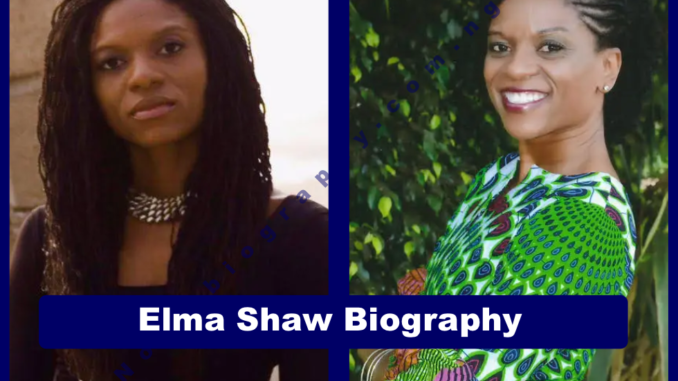
Discover the inspiring journey of Elma Shaw, Liberian author of Redemption Road and founder of Cotton Tree Press, transforming trauma into literary healing.
Elma Shaw is a Liberian-born author, publisher, and advocate whose work bridges the painful past of war-torn West Africa with a hopeful vision for literary healing and justice. Best known for her award-winning debut novel Redemption Road: The Quest for Peace and Justice in Liberia (2008), Shaw has emerged as one of contemporary Africa’s most important voices on post-conflict reconciliation, women’s empowerment, and the transformative power of storytelling.
What strikes me most about Shaw’s work is her unflinching honesty in confronting Liberia’s traumatic civil war history while maintaining profound compassion for both victims and perpetrators. She doesn’t offer easy answers or simple heroes—instead, she presents the messy, complicated reality of how societies heal after unspeakable violence. Her decision to document these stories wasn’t just literary ambition; it was a moral imperative born from living through the chaos herself.
Key Details Of Elma Shaw Biography
| Field | Information |
|---|---|
| Full Name | Elma Shaw |
| Date of Birth | December 10 (year not publicly disclosed) |
| Place of Birth | Monrovia, Liberia |
| Nationality | Liberian |
| Occupation | Author, Publisher, Writing Coach, Women’s Advocate |
| Education | BA in Communication Media (Journalism), MA in Film and Video (Screenwriting) – American University |
| Current Role | Founder & CEO of Cotton Tree Press |
| Notable Work | Redemption Road (2008) |
| Family | Married with two children |
| Current Residence | Rwanda (previously lived in Liberia and United States) |
| Genre | Literary Fiction, African Literature, War Literature |
Early Life and Background
Born on December 10 in Monrovia, Liberia, Elma Shaw grew up during a pivotal period in Liberian history. She describes enjoying a privileged early childhood before the country descended into political chaos. At age five, Shaw received her first book from Cousin Corinna, proprietor of her school and a close friend of her grandmother Eugenia, sparking what would become a lifelong passion for reading and storytelling.
Shaw’s formative years coincided with Liberia’s political upheaval. She returned to Liberia from England just in time to witness the 1979 Rice Riots and the devastating 1980 coup d’état in which President William R. Tolbert was assassinated by Samuel Doe. These events marked the beginning of decades of instability that would profoundly shape her worldview and creative work.
The contrast between her early privileged life and the violence that followed gave Shaw a unique perspective on how quickly societies can unravel and how deeply trauma affects communities across all social classes. This firsthand experience of living through a coup and civil war became the foundation for her most important work.
Education and Academic Journey
Shaw attended boarding school before pursuing higher education in the United States, where she earned a Bachelor of Arts degree in Communication Media with an emphasis in Broadcast Journalism from American University. She continued at the same institution to complete a Master’s degree in Film and Video with an emphasis in Screenwriting.
This educational background reflects Shaw’s multimedia approach to storytelling. She understood from early on that reaching, teaching, healing, and inspiring audiences required mastery of various communication forms—from written word to visual media. Her journalism training gave her the skills to document truth with clarity and precision, while her film studies taught her the power of narrative structure and emotional resonance.
The choice to focus on communication and media was deeply personal. Shaw has stated that literature, visual media, and real life all profoundly impacted how she saw herself and the world, and she wanted to create that same impact for others.
Career Journey and Major Achievements
Living Through History, Writing for the Future
After completing her education in the United States, Shaw made the courageous decision to return to Liberia during the administration of former President Charles Taylor—a period marked by continuing rebel insurgency and widespread violence. She was present for both the darkest and most hopeful moments in recent Liberian history: the ongoing conflict, the historic election of Ellen Johnson Sirleaf as Africa’s first female president in 2005, and the establishment of the national Truth and Reconciliation Commission.
These experiences weren’t merely background research—they were the lived reality that demanded literary expression. Shaw witnessed killers living with impunity in post-war Liberia even though everyone knew who they were and what they had done. There were virtually no programs designed to help survivors, and the formal reconciliation process hadn’t yet begun.
Redemption Road: A Nation’s Story
Published in 2008 by Cotton Tree Press, Redemption Road: The Quest for Peace and Justice in Liberia tells the story of Bendu Lewis, a young woman in her late twenties who counsels survivors of Liberia’s brutal civil war while struggling with her own traumatic memories. When the warlord who once held her captive suddenly appears in town, Bendu must decide whether to pursue justice or healing—and confront the painful secrets of her own war-time experiences.
The novel is set during Charles Taylor’s administration and uses flashbacks to explore the 1980 coup and the civil war that lasted from 1989 to 2003, claiming approximately 200,000 lives and displacing some 500,000 people. The title itself references the road where twelve prominent government officials were executed on April 22, 1980, shortly after the coup—a location that became synonymous with Liberia’s trauma.
Shaw researched extensively for the novel, interviewing both fighters and survivors to ensure authenticity. What emerged was a complex, nuanced narrative that refused simple categorizations of good and evil, instead presenting characters as fully human—capable of both terrible violence and profound courage, sometimes within the same person.
Critical Acclaim and Awards
Redemption Road received exceptional critical reception and earned Shaw significant recognition:
- Foreword by President Ellen Johnson Sirleaf, who wrote: “There comes a time in every country’s history when things go astray, when we don’t put our best faces forward, when we falter and stumble.”
- Inspired a documentary: “The Road to Redemption” (2008), which explored the stories of women fighters who survived the war
- 2015 African Sheroes Award Nomination for Outstanding Writer/Novelist in recognition of her literary and humanitarian work
- WAEC Prescribed Text (2026-2030): Selected by the West African Examinations Council as a Literature-in-English text for students in Ghana, Liberia, Nigeria, Sierra Leone, and The Gambia preparing for the West African Senior School Certificate Examination
The novel has been praised by leading scholars and writers. Charles R. Larson of American University called it essential reading for post-conflict Africa, predicting it would find enthusiastic readers in Liberia, Sierra Leone, South Africa, Rwanda, and Congo. Professor Wilton Sankawulo of the University of Liberia described it as “a brilliant novel…a promising and incisive voice” and “the best Liberian novel I have ever read.”
Cotton Tree Press: Building Africa’s Literary Future
Shaw is the Founder and CEO of Cotton Tree Press, an independent publishing house dedicated to publishing fiction, poetry, and prose by African writers. Named after the historic Cotton Tree that has stood in Freetown, Sierra Leone for centuries—a symbol of freedom for formerly enslaved people—the press reflects Shaw’s commitment to liberation through literature.
Under Shaw’s leadership, Cotton Tree Press has:
- Published multiple works including Monrovia Rain and Other Stories Lost and Found (which Shaw edited)
- Launched Leroi Books, a children’s imprint debuting with James Dwalu’s Rainy Season Rhymes
- Created online literary workshops for young people across Rwanda, Burundi, Uganda, and Côte d’Ivoire
- Distributed books internationally through African Books Collective
Shaw describes herself not just as a publisher but as a book coach who helps “Africa’s game changers become authors too.” Her philosophy is simple but powerful: well-written and beautifully published books can inspire a love of reading in children and open up a world of possibilities for readers and authors of every age.
Advocacy and Women’s Empowerment
Throughout her career, Shaw has been a champion for women and girls. Her advocacy work includes:
- Lead Writer for Big Belly Business: A Liberian woman’s guide to a healthy pregnancy, created in partnership with The What To Expect Foundation
- Teaching and mentoring: Conducting online creative writing workshops for African youth during the COVID-19 pandemic
- Support for girls’ education: Working with organizations like HOPE Girls Mentoring & Advocacy Group (formerly Liberia Hope Fund)
Shaw’s commitment to women’s voices extends through her literature, which consistently centers female experiences and agency in contexts where women’s perspectives are often marginalized.
Other Literary Works
Beyond Redemption Road, Shaw has contributed to:
- Portor Portor: 12 New African Poets (contributor)
- Various publications including Liberia Travel & Life Magazine, Pambazuka News, and UNMIL Focus
Personal Life and Philosophy
Shaw is married with two children. After living in Liberia for many years, she relocated to Rwanda, where she continues her writing, publishing, and advocacy work. She has also lived in Silver Spring, Maryland, at various points.
Those who know Shaw describe her as someone whose overflowing bookshelves and perpetually full e-Reader reflect her voracious reading appetite. She loves to teach and loves to dance, describing herself as someone who is “Divinely guided” in everything she does.
In a surprising revelation, Shaw is also a certified instructor in pole and aerial dance, demonstrating her belief in physical expression and embodied healing—themes that resonate powerfully in her fiction, where women’s bodies serve as sites of both trauma and agency.
Shaw’s philosophy centers on the power of stories to heal, teach, and transform. She doesn’t pick topics to write about arbitrarily; instead, her heart follows themes of social justice, women’s empowerment, and personal or spiritual development. She has stated that ideas truly come alive not when she thinks about them superficially, but when she sits down and puts her fingers on the keyboard—suggesting a deeply intuitive creative process.
Literary Themes and Style
Shaw’s writing addresses complex themes with remarkable sensitivity:
Post-Conflict Reconciliation: Her work explores how individuals and societies navigate healing after mass trauma, questioning whether true peace requires justice or forgiveness—or some combination of both.
Gendered Violence and Agency: Shaw unflinchingly depicts violence against women during war while simultaneously showing women’s resilience, survival strategies, and paths toward reclaiming agency.
Collective Memory and Individual Healing: Her narratives suggest that personal redemption and national reconciliation are intertwined—as her protagonist Bendu discovers, “peace in the home is peace in the nation.”
Complexity of Perpetrators: Perhaps most daringly, Shaw presents fighters and war criminals not as monsters but as fully human, with backstories that explain (though don’t excuse) their violence. Commander Cobra/Moses Varney is simultaneously perpetrator and product of his circumstances.
Her writing style combines literary sophistication with accessible storytelling. She uses flashbacks effectively to weave between past trauma and present consequences, creating suspense while building deep emotional resonance. Critics have praised her ability to “swim through the murky depths of Liberia’s recent past without holding her breath,” allowing readers to breathe through the pain alongside her characters.
Impact on African Literature
Shaw’s work has contributed significantly to post-conflict African literature, a genre that includes writers addressing trauma in Rwanda, Sierra Leone, Congo, and other war-affected nations. Her inclusion on the WAEC prescribed text list ensures that thousands of West African students will engage with themes of conflict prevention, reconciliation, and justice through her narrative.
Academic scholars have studied Redemption Road extensively, analyzing topics including:
- Women’s bodies as sites of redemption in post-war contexts
- Hypermasculinity and gendered violence during conflict
- Limitations of institutional justice versus personal healing
- The role of fiction in facilitating difficult national conversations
Shaw stands in the tradition of Liberian literary greats like Bai T. Moore and Wilton Sankawulo while carving her own distinctive path. As a pioneer of contemporary Liberian literature, she has both the power and responsibility to help forge a publishing industry and inspire a stronger culture of reading in West Africa.
Challenges and Triumphs
Like many African writers, Shaw faces the dual challenge of being a pioneer in a developing literary market. The advantages and disadvantages are intertwined: while Liberian authors are still considered trailblazers with the freedom to shape their nation’s literary future, they also lack established infrastructure for publishing, distribution, and promotion.
Shaw has confronted these challenges head-on by founding her own publishing house, creating distribution partnerships with organizations like African Books Collective, and leveraging digital platforms to reach global audiences. During the COVID-19 pandemic, she participated in online African book festivals including Aké Arts & Book Festival, FEMRITE’s literary events, and Afrolit Sans Frontières, demonstrating adaptability and commitment to community building.
Interesting Facts and Lesser-Known Details
- Shaw received her first book at age five from Cousin Corinna, sparking her lifelong love of reading
- She has trained extensively in pole and aerial dance and became a certified instructor
- Her bookshelves are described as “always overflowing” and her e-Reader is perpetually full
- She doesn’t superficially plan her writing—ideas come alive only when she actually begins typing
- Cotton Tree Press is named after the historic Cotton Tree in Freetown, Sierra Leone, a symbol of freedom
- Shaw describes her creative process during Redemption Road as feeling like “the spirits of the departed lined up eagerly to prod me and make sure that side came out”
- She has worked with Green Hills Academy, an IB World School in Rwanda
Conclusion
Elma Shaw’s journey from privileged child in Monrovia to survivor of coups and civil war to internationally recognized author and publisher represents a profound commitment to truth-telling and healing through literature. Her decision to return to Liberia during Charles Taylor’s administration, to document painful stories that many wanted to forget, and to create a publishing platform for African voices demonstrates extraordinary courage and vision.
What makes Shaw’s contribution particularly significant isn’t just that she wrote an important novel—it’s that she created infrastructure for other African storytellers to share their voices. Through Cotton Tree Press, she’s building the literary ecosystem that West Africa needs, one beautifully published book at a time.
Redemption Road asks difficult questions about justice, forgiveness, and reconciliation that remain urgently relevant across post-conflict societies worldwide. Shaw doesn’t offer easy answers, but she does something perhaps more valuable: she creates space for honest conversation about how we move forward after collective trauma.
As her work reaches thousands of West African students through the WAEC curriculum, Shaw’s influence will extend far beyond her own lifetime. She’s not just documenting history—she’s shaping how future generations understand their past and imagine their future. In a region still grappling with the legacies of violence and colonialism, that’s revolutionary work indeed.
FAQs
Who is Elma Shaw? Elma Shaw is a Liberian author, publisher, and advocate best known for her award-winning novel Redemption Road and as founder of Cotton Tree Press, which publishes works by African writers.
What is Elma Shaw known for? She is known for Redemption Road (2008), a powerful novel about post-war healing in Liberia that has been selected as a WAEC prescribed text for West African students. She’s also recognized for founding Cotton Tree Press and her advocacy for women and girls.
What is Elma Shaw’s educational background? Shaw holds a BA in Communication Media (Journalism) and an MA in Film and Video (Screenwriting), both from American University in Washington, D.C.
Where does Elma Shaw currently live? Elma Shaw currently lives in Rwanda with her husband and two children, though she previously lived in Liberia and the United States.
What are the main themes in Elma Shaw’s work? Her work explores post-conflict reconciliation, trauma and healing, women’s empowerment, justice versus forgiveness, and the complexities of war’s impact on individuals and communities.
Leave a Reply