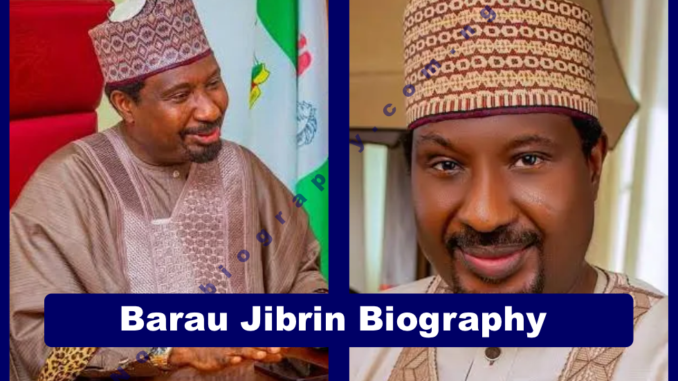
Learn about Barau I. Jibrin, Nigeria’s Deputy Senate President, accountant, philanthropist, and football club owner transforming lives through service.
Senator Barau I. Jibrin, CFR, represents a unique blend of fiscal expertise and legislative leadership in Nigerian politics. Currently serving as Deputy President of the Nigerian Senate since June 2023, the Kano North Senator has built a remarkable career grounded in accounting precision, business acumen, and genuine commitment to public service. At 66 years old, Jibrin embodies the principle that effective governance requires both technical competence and deep community connection.
What I find most compelling about Jibrin’s story is how his accounting background shapes his approach to governance. In a political landscape often criticized for fiscal mismanagement, having a Deputy Senate President who understands budgets, appropriations, and financial accountability isn’t just refreshing—it’s essential. His journey from the Kano State Foundation accounting department to Nigeria’s second-highest legislative office demonstrates that technical expertise combined with political savvy can create transformative leadership.
Key Details Of Barau Jibrin Biography
| Field | Information |
|---|---|
| Full Name | Barau I. Jibrin |
| Post-Nominal | CFR (Commander of the Federal Republic) |
| Date of Birth | June 19, 1959 |
| Age | 66 years (as of 2025) |
| Place of Birth | Kabo, Kano State, Nigeria |
| Nationality | Nigerian |
| State of Origin | Kano State |
| Religion | Islam |
| Marital Status | Married with children |
| Current Position | Deputy President of the Nigerian Senate (2023-present) |
| Constituency | Kano North Senatorial District |
| Political Party | All Progressives Congress (APC) |
| Education | Bachelor’s in Accounting; Master’s degrees in Financial Management & Pricing, Management, MBA; Certificate in Financial Management (Cornell University); PhD in Corporate Entrepreneurship (2025) |
| Previous Roles | House of Representatives Member (1999-2003), Various Senate Committee Chairmanships |
| Other Position | First Deputy Speaker, ECOWAS Parliament |
| Business Interests | Manufacturing, Insurance, Construction |
| Football Club | Founder and Owner of Barau FC (NPFL) |
Early Life and Background
Born on June 19, 1959, in Kabo Township, the headquarters of Kabo Local Government Area of Kano State, Barau Jibrin grew up in northern Nigeria during a period of significant political and economic change. His early life in Kano, Nigeria’s second most populous city and a major commercial hub, exposed him to both the opportunities and challenges facing ordinary Nigerians.
From an early age, Jibrin demonstrated an aptitude for numbers and business, traits that would later define his professional career. Growing up in Kano, a city with deep historical roots as a trading center dating back centuries, shaped his understanding of commerce, community, and the interconnectedness of economic prosperity and social development.
His formative years in Kabo instilled in him values of hard work, community service, and the importance of education—principles that would guide his trajectory from accountant to businessman to national legislator. The nickname “Maliya,” a term of affection and respect used by those close to him, reflects the warmth and approachability that characterizes his public service style.
Education and Academic Journey
Barau Jibrin’s educational foundation reflects his commitment to continuous learning and professional development. He holds a bachelor’s degree in accounting, establishing the technical expertise that would become his trademark in legislative work. Understanding that mastery requires specialization, he pursued multiple postgraduate qualifications, including master’s degrees in financial management and pricing, management, and a Master of Business Administration (MBA).
His academic journey extended internationally when he obtained a certificate in Financial Management for Business Decisions from the prestigious Cornell University in the United States. This international exposure provided him with global perspectives on fiscal policy, budgeting systems, and financial governance—knowledge he would later apply to Nigeria’s appropriations process.
Most recently, in December 2025, Jibrin earned a Doctor of Philosophy (PhD) in Corporate Entrepreneurship from Maryam Abacha American University in the Republic of Niger. He successfully defended his doctoral thesis titled “Entrepreneurial Orientation and Financial Performance of SMEs: The Moderating Role of Environment.” This achievement at age 66 demonstrates his belief that learning never stops and that academic rigor strengthens public service.
This extensive educational background sets Jibrin apart in Nigerian politics, where technical expertise is often overshadowed by political connections. His credentials aren’t just decorative—they inform his practical approach to legislation, particularly in areas involving public finance, budgeting, and economic policy.
Career Journey: From Private Sector to Public Service
Early Professional Experience
After completing his university education, Jibrin worked briefly in the accounting department of the Kano State Foundation, gaining practical experience in public sector financial management. However, in 1992, he made the bold decision to resign and venture into private business, launching enterprises with interests spanning manufacturing, insurance, and construction sectors of the Nigerian economy.
This private sector experience gave him firsthand understanding of the challenges Nigerian businesses face—regulatory hurdles, infrastructure deficits, access to capital, and policy inconsistency. Unlike politicians who theorize about economic development, Jibrin understood it from the ground up, having built and managed successful businesses himself.
Entry into Politics (1999-2003)
Jibrin’s political career began in 1999 when Nigeria returned to democratic rule after prolonged military governance. The people of Tarauni Federal Constituency in Kano Central Senatorial District elected him to represent them in the House of Representatives, recognizing his contributions to community development, particularly in health and education.
During his tenure in the Green Chamber from 1999 to 2003, Jibrin chaired the Committee on Appropriations and served on the Committee on Power. His accounting background made him a natural fit for appropriations work, where he brought technical precision to budget review processes. President Olusegun Obasanjo, recognizing his legislative competence, appointed him to a committee tasked with reviewing Nigeria’s budgetary process—a testament to his expertise even as a first-term legislator.
After completing his term in 2003, Jibrin returned to private practice, demonstrating that his political involvement was driven by service rather than careerism.
State-Level Service
At the state level, Jibrin served as Chairman of Kano State Investment and Properties Ltd. and as Commissioner of Science and Technology in Kano State. In 2009, the Kano State Government appointed him as a member of the Kano State Business Incentive Committee, leveraging his business expertise to attract investment and stimulate economic growth.
Senate Career (2015-Present)
Jibrin returned to legislative politics in 2015, winning election to the Senate to represent Kano North Senatorial District on the APC platform. He was re-elected in 2019 and 2023, reflecting constituent satisfaction with his representation.
8th Senate (2015-2019): After the Senate’s inauguration in June 2015, Jibrin was named Vice Chairman of the Senate Committee on Petroleum (Downstream) and later elevated to chair the same committee. In late 2016, he was reassigned to chair the Senate Committee on Tertiary Institutions and TETFund, a position he held until the end of the 8th Assembly. He also served on committees covering Niger Delta, Industries, Land Transportation, and Appropriations.
9th Senate (2019-2023): Given his accounting background, Jibrin was appointed Chairman of the Senate Committee on Appropriations during the 9th Senate, one of the most powerful positions in Nigerian legislature. This role placed him at the center of Nigeria’s annual budget process, where billions of naira in public funds are allocated. He also served on committees covering Police Affairs, Industries, Environment, and Inter-Parliamentary Affairs.
His appropriations work earned him recognition as “Northern Senator of the Year” in 2017 by the Nigerian Senate Press Corps, acknowledging his diligent oversight and fiscal competence.
Deputy Senate President (2023-Present)
On June 13, 2023, when the 10th National Assembly was inaugurated following President Bola Tinubu’s proclamation, Jibrin emerged as Deputy Senate President unopposed. His nomination, made by Senator Ali Ndume of Gombe North, received endorsement from 62 senators-elect prior to the session, making his election by acclamation a foregone conclusion.
The APC’s zoning arrangement allocated the Senate Presidency to the South-South geopolitical zone (filled by Godswill Akpabio) and the Deputy position to the North. Jibrin’s selection reflected his seniority as a fourth-term lawmaker, his reputation for competence, and his ability to build consensus across party lines.
As Deputy Senate President, Jibrin chairs plenaries in the Senate President’s absence, represents the Senate at international parliamentary forums (including OIC parliamentary conferences), and remains actively involved in appropriations and constitutional review matters. He also serves as First Deputy Speaker of the ECOWAS Parliament, extending his influence across West Africa.
Major Legislative Achievements and Contributions
Fiscal Oversight and Budgetary Excellence
Jibrin’s greatest legislative impact lies in public finance and budget oversight. His work on the Appropriations Committee helped shape budget debates and allocations, bringing disciplined, technically informed oversight to Nigeria’s budget process. Unlike many legislators who approach budgets politically, Jibrin applies accounting rigor, questioning allocations, tracking implementation, and demanding accountability.
His contributions to budgetary reforms helped reduce some of the delays and inefficiencies that historically plagued Nigeria’s appropriations process. He advocated for timely budget presentation, transparent allocation processes, and realistic revenue projections—reforms that strengthen democratic governance.
Constitutional Review Leadership
In October 2025, Jibrin revealed that the National Assembly was considering 69 bills, 55 state-creation requests, two boundary adjustments, and 278 proposals for new local governments as part of the ongoing review of the 1999 Constitution. Speaking at a two-day joint retreat of Senate and House Committees on Constitution Review in Lagos, he emphasized the need for reflection over haste and substance over show.
His approach to constitutional reform embodies patience and inclusiveness, recognizing that Nigeria’s constitution isn’t just a legal document but a moral covenant between the nation and its people. Rather than rushing through amendments, Jibrin advocates for thorough consultation, careful consideration of regional impacts, and consensus-building across diverse interests.
Advocacy for Executive-Legislature Harmony
In January 2025, delivering a convocation lecture at Al-Hikmah University titled “Managing Executive-Legislature Relations towards Democratic Consolidation in Nigeria’s Fourth Republic,” Jibrin called for stronger cooperation and mutual respect between the Executive and Legislature. He argued that persistent friction between both arms weakens governance outcomes and public trust.
He highlighted that budget delays often stem from trust deficits and poor engagement rather than constitutional flaws, and advocated for regular structured dialogue, enhanced legislative capacity, strict adherence to constitutional provisions, and improved civic education. His vision for democratic consolidation prioritizes institutional strength over personality-driven politics.
Personal Life and Family
Barau Jibrin is married and has children. In 2023, one of his sons married the daughter of Deputy House Minority Leader Aliyu Sani Madaki, strengthening political and family ties within northern Nigeria’s political establishment. His son, Shawall Barau Jibrin, serves as President of Barau FC, the family’s football club.
Despite his high-profile political position, Jibrin is described by friends and colleagues as unassuming and modest. He doesn’t seek gaudy celebrations or vanity projects, preferring instead to let his work speak for itself. This humility, combined with his technical competence, has earned him respect across party lines and from constituents who appreciate leaders who deliver results rather than rhetoric.
Philanthropy and Community Development
Barau I. Jibrin Foundation (BIJF)
Founded years ago to provide humanitarian assistance, empower youth, promote academic excellence, and expand educational opportunities, the Barau I. Jibrin Foundation focuses particularly on graduates from Kano North Senatorial District. The foundation’s scholarship program provides fully funded domestic and foreign scholarships in cutting-edge fields like artificial intelligence, robotics, cybersecurity, and forensic science.
In recent years, the foundation awarded postgraduate scholarships to 300 students within Nigeria and additional postgraduate foreign scholarships in areas like Information Security and Cyber Forensics. This focus on emerging technologies demonstrates Jibrin’s understanding that Nigeria’s future depends on equipping young people with skills relevant to the 21st-century economy.
Infrastructure and Community Projects
Jibrin has facilitated numerous community development projects, including construction of rural roads to enhance connectivity, installation of solar-powered boreholes for clean water access in Kano North, donations of 1,000 motorcycles to Kano State Police to strengthen community security, and provision of 107 buses to ease transportation challenges.
These projects reflect a politician who understands that development isn’t just about national policy—it’s about ensuring that constituents have basic infrastructure that improves daily life.
Agricultural Empowerment
Recognizing agriculture’s importance to northern Nigeria’s economy, Jibrin has empowered farmers across the seven Northwest states with loans, fertilizers, and modern equipment. This support helps small-scale farmers increase productivity, improve food security, and lift themselves out of poverty.
Barau FC: Building Hope Through Football
In a move that showcases his commitment to youth development and job creation, Jibrin founded Barau Football Club, based in Dambatta, Kano State. Speaking to Premium Times in June 2024, he explained that he formed the club to reduce unemployment among young people and build it into a global brand.
The club’s rise has been meteoric. Starting in Nigeria’s third tier, Barau FC gained promotion to the Nigeria National League (NNL) after defeating Yoca Crocodiles FC. In 2025, the team finished second in the NNL Super 8 playoffs, earning promotion to the Nigeria Premier Football League (NPFL) for the first time in its history—all within a remarkably short timeframe.
To celebrate this achievement, Jibrin gifted each of the 35 players a brand-new motorcycle and N500,000 cash (totaling N17.5 million), demonstrating his commitment to rewarding excellence. He promised that if the team wins the NPFL title, players would receive cars. The club has since appointed former Super Eagles forward Dominic Iorfa as General Manager and signed international players, signaling ambition to compete at continental level.
In October 2025, Barau FC secured a stunning 2-1 comeback victory over rivals Kano Pillars in their first-ever NPFL derby, announcing their arrival as serious contenders. The club’s home ground is the Dambatta Stadium in Kano, and it serves as a rival to the established Kano Pillars FC.
Jibrin regularly engages with the technical crew before matches, drawing on his own experience as a former football player. His hands-on involvement and generous investment in youth through sports demonstrate a holistic approach to development that goes beyond traditional politics.
Awards, Honors and Recognition
Jibrin’s public service and contributions have earned him numerous honors, including the Commander of the Federal Republic (CFR), one of Nigeria’s highest national honors conferred by President Muhammadu Buhari in October 2022. He was named Northern Senator of the Year 2017 by the Nigerian Senate Press Corps for his legislative excellence and constituency representation.
In March 2024, Bayero University, Kano conferred an honorary Doctor of Laws (honoris causa) on him in recognition of his public service and contributions to education and development. Most recently, in December 2025, he earned a PhD in Corporate Entrepreneurship from Maryam Abacha American University after successfully defending his doctoral thesis.
Recent Political Developments
Tax Reform Bills Controversy
In late 2024 and early 2025, Jibrin found himself at the center of controversy surrounding tax reform bills before the National Assembly. Some northern stakeholders viewed the proposed reforms as potentially harmful to the region’s fiscal autonomy, while others prioritized broader federal reforms.
Protests at the National Assembly in December 2024 included warnings against targeting Jibrin personally, highlighting divisions within northern political circles. These disputes positioned Jibrin as a bridge between regional advocates and federal priorities, though hardline sectionalists accused him of disloyalty despite his APC alignment.
Kano Political Realignment
In January 2026, Jibrin played a key role in Governor Abba Kabir Yusuf’s defection from the New Nigeria People’s Party (NNPP) to the APC. Revealing that President Tinubu had directed APC leaders in Kano to fully support the governor, Jibrin described the defection as a major gain for the ruling party.
Jibrin emphasized unity over personal ambition, recalling instances where he stepped aside for party unity, including during National Assembly leadership contests and previous governorship races. He announced that following the governor’s entry into the APC, all political rivalry should be set aside, demonstrating his commitment to party cohesion over individual advancement.
Vision for Democratic Governance
Jibrin’s vision for Nigeria centers on institutional strengthening, fiscal responsibility, and executive-legislative cooperation. He believes Nigeria’s democracy can only consolidate if both arms of government work collaboratively rather than antagonistically.
He advocates for enhanced legislative capacity through research and institutional support, citing the establishment of the National Institute for Legislative and Democratic Studies and the National Assembly Library Trust Fund as important reforms. He also emphasizes strict adherence to constitutional provisions, regular structured engagement between government branches, and improved civic education to create informed citizens who can hold leaders accountable.
On regional security challenges, speaking at the 25th Anniversary of the Arewa Consultative Forum in November 2025, Jibrin stressed that northern Nigeria possesses the capacity and resources to overcome insecurity if leaders work together with coordinated political will. He urged unity, collaboration, and a systematic approach to surmounting the region’s challenges.
Interesting Facts and Lesser-Known Details
- Jibrin is known by the affectionate nickname “Maliya” among friends and constituents.
- He earned his PhD at age 66, defending his thesis in December 2025, proving that academic pursuit has no age limit.
- As a former football player himself, he regularly engages with Barau FC’s technical crew before matches, providing insights based on his own sporting experience.
- His foundation provides scholarships specifically in futuristic fields like artificial intelligence, robotics, and cybersecurity—recognizing that Nigeria’s future depends on technological competence.
- Despite holding one of Nigeria’s highest political offices, he is described as remarkably modest and unassuming, preferring substantive work to public fanfare.
- He serves as First Deputy Speaker of the ECOWAS Parliament, extending his influence across West Africa’s legislative landscape.
Conclusion
Senator Barau I. Jibrin’s journey from accounting department employee to Deputy President of the Nigerian Senate illustrates how technical expertise, combined with genuine commitment to public service, creates transformative leadership. What makes his story particularly valuable to Nigeria’s democratic project is how he brings fiscal discipline and accounting rigor to a political system often criticized for financial mismanagement.
Unlike many politicians who view public office as an end in itself, Jibrin treats it as a platform to touch lives—through scholarships that change educational trajectories, infrastructure projects that improve daily existence, agricultural support that lifts farmers from poverty, and a football club that gives young people hope and purpose. His quiet effectiveness stands in contrast to the bombast often associated with Nigerian politics.
As Nigeria grapples with constitutional reform, fiscal challenges, and the need for stronger democratic institutions, having leaders like Jibrin—who understand both the technical requirements of governance and the human needs of constituents—becomes essential. His emphasis on executive-legislature harmony, institutional strengthening, and evidence-based policymaking offers a roadmap for democratic consolidation.
At 66, with a newly earned PhD and continued commitment to learning and service, Jibrin demonstrates that effective leadership requires both seasoned experience and openness to new knowledge. As he continues his work as Deputy Senate President and pushes for constitutional reforms that strengthen Nigeria’s federal system, his legacy will ultimately be measured not by titles held but by systems improved and lives transformed—a metric by which he’s already succeeding remarkably well.
FAQs
Who is Barau Jibrin? Barau I. Jibrin, CFR, is a Nigerian politician, accountant, and businessman currently serving as Deputy President of the Nigerian Senate. He represents Kano North Senatorial District and is a member of the All Progressives Congress (APC).
What is Barau Jibrin known for? He is known for his fiscal expertise, particularly his work chairing the Senate Committee on Appropriations, his role as Deputy Senate President, and his philanthropic efforts through the Barau I. Jibrin Foundation. He also founded Barau FC, which recently gained promotion to Nigeria’s Premier Football League.
What is Barau Jibrin’s educational background? Jibrin holds a bachelor’s degree in accounting, master’s degrees in financial management and pricing, management, and an MBA. He also obtained a certificate in Financial Management from Cornell University and earned a PhD in Corporate Entrepreneurship in December 2025.
How old is Barau Jibrin? Born on June 19, 1959, Barau Jibrin is currently 66 years old as of 2025.
What are Barau Jibrin’s major achievements? His achievements include serving as Chairman of the Senate Appropriations Committee, being elected Deputy Senate President unopposed in 2023, receiving the CFR national honor, founding Barau FC which gained NPFL promotion within one season, and providing scholarships to hundreds of students through his foundation.
Leave a Reply